Lung cancer-fueled emergency myelopoiesis is characterized by an increase of S100A9+ and LCN2+ hematopoietic stem and progenitor cells

Lung cancer-fueled emergency myelopoiesis is characterized by an increase of S100A9+ and LCN2+ hematopoietic stem and progenitor cells
Calderon-Espinosa, E.; De Ridder, K.; Carpentier, M.; De Veirman, K.; Kancheva, D.; Scheyltjens, I.; Movahedi, K.; Van den Eynde, K.; De Leyn, P.; Depypere, L. P.; Hernot, S.; Jansen, Y.; Goyvaerts, C.
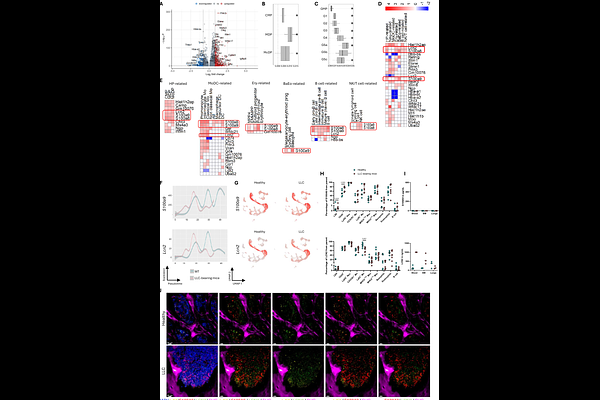
AbstractThe pivotal role of tumor infiltrating myeloid cells in lung cancer composition and response to therapy is universally recognized. Nevertheless, their main cradle being the bone marrow (BM), remains vastly understudied owing to the spatiotemporal complexity of hematopoiesis and its hard to access anatomical location. Therefore, the BM niche of lung cancer subjects remains understudied which is why we integrated transcriptional and translational single-cell profiling, ELISA and two-photon microscopy to characterize the medullary hematopoietic compartment in orthotopic lung cancer-bearing mice with validation in human non-small cell lung cancer (NSCLC) samples. In brief we found that lung cancer remotely alters the entire hematopoietic process resulting in higher levels of hematopoietic stem cells (HSCs), myeloid and lymphoid multipotent progenitors (MPPs) and downstream predominance of Granulocyte Monocyte Progenitors (GMP), early Granulocyte Progenitors (GP) and Common Monocyte Progenitors (cMoP) at the expense of mature neutrophils and B cells. Furthermore, a significant increase in the expression and secretion of S100A9 and Lipocalin-2 (LCN2), was characteristic across the entire hematopoietic trajectory in lung cancer-bearing mice and patients. In vivo inhibition of S100A9 with Tasquinimod reduced tumor growth, irrespective of its combination with immunotherapy. In addition, it altered the secretion profile of S100A9 but also LCN2 in the BM, suggesting that S100A9 serves as an upstream regulator of LCN2 and holds therapeutic premise to treat immunotherapy refractory lung cancer.