Loss of TAFAZZIN leads to perturbation of amino acid metabolism and reduction of collagen synthesis

Loss of TAFAZZIN leads to perturbation of amino acid metabolism and reduction of collagen synthesis
Ramim, A. M.; Ralph-Epps, T.; Vo, L.; Jang, H.; Liyanage, J. S. S.; Lowran, K.; Greenberg, M.
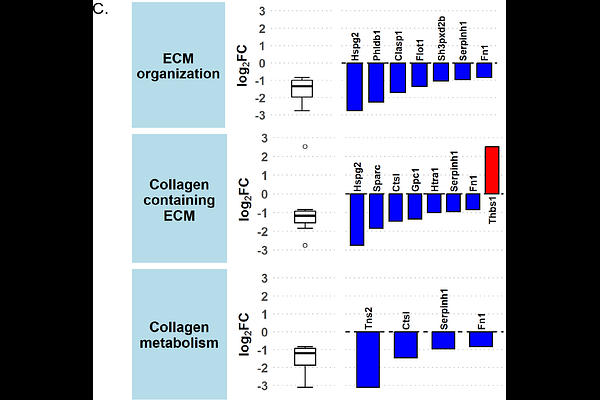
AbstractBarth syndrome is a life-threatening genetic disorder caused by mutations in the TAFAZZIN (TAZ) gene, which disrupt remodeling of cardiolipin in mitochondria. The disease is associated with cardiac and skeletal myopathy, neutropenia, fatigue, and metabolic dysfunction. Previous studies showed that loss of TAZ decreases pyruvate dehydrogenase activity, reduces glucose flux into the TCA cycle, and impairs fatty acid metabolism. To test the hypothesis that amino acid (AA) metabolism may be altered to compensate for these deficiencies, we characterized AA metabolism in TAZ-deficient mouse myoblasts (TAZ-KO). Levels of branched-chain amino acids (BCAAs) were reduced, while proline levels were increased in TAZ-KO cells. Levels of proline dehydrogenase and glutamate dehydrogenase, which convert proline to TCA cycle intermediates, were increased. 13C5-proline isotope tracing demonstrated elevated conversion of proline into glutamate and TCA cycle intermediates. SILAC analysis using [U- 13C6, 15N2]-Lys and [U- 13C6]-Arg revealed decreased synthesis of collagen and proteins associated with extracellular matrix (ECM). Gene expression and protein analyses revealed reduced collagen expression, lower total collagen content, decreased collagen crosslinking enzymes, decreased proline hydroxylation and reduced synthesis of new collagen and cell-adhesion proteins. SILAC analysis using [U- 13C6, 15N2]-proline also showed diminished incorporation of proline into newly synthesized ECM proteins. Together, our findings reveal that loss of TAZ leads to increased proline catabolism to the TCA cycle, decreased incorporation of proline into collagen, and impaired collagen synthesis and ECM remodeling.