Pathogen-induced red pigmentation uncovers a conserved floral defense in Asteraceae

Pathogen-induced red pigmentation uncovers a conserved floral defense in Asteraceae
Hassan Muralidhar, S.; Roijen, L.-M.; Malleshaiah, S.; van der Hooft, J. J. J.; Pucker, B.; van Kan, J. A. L.
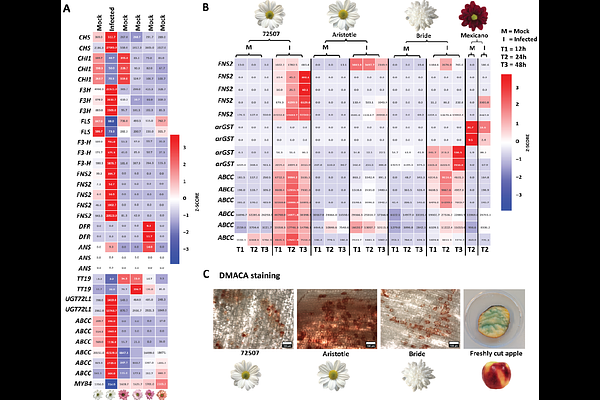
AbstractFlower colour is predominantly selected for visual appeal and pollinator-driven evolution, however its role in plant-pathogen interaction remains unclear. Here, we investigated the relationship between anthocyanin accumulation and resistance to the necrotrophic pathogen Botrytis cinerea in Chrysanthemum morifolium. Using a unique set of spontaneous colour mutants sharing a common genetic background, we demonstrate that higher anthocyanin levels are associated with enhanced resistance to B. cinerea. Furthermore, we also observed pathogen induced anthocyanin accumulation at pathogen penetration sites in the white cultivars. Transcriptomics and metabolomics analyses revealed shift in metabolic pathways from flavonols towards flavone and anthocyanin biosynthesis during infections. A broader survey of taxonomically distant flowering species identified pathogen-induced red pigmentation is largely restricted to the members of the Asteraceae family. Notably, we observed divergence between wild and domesticated species, where the wild species retained the inducible pigmentation response and exhibited resistant to B. cinerea, whereas the cultivated species showed loss of this response, correlating with its increased susceptibility. Overall, our findings indicate that breeding for ornamental traits may have inadvertently selected against floral immunity.