Automated culture and monitoring of a high-throughput human heart-on-a-chip

Automated culture and monitoring of a high-throughput human heart-on-a-chip
Schellberg, B. G.; Burson, N. T.; Gomes, J.; Dai, G.; Koppes, A. N.; Koppes, R. A.
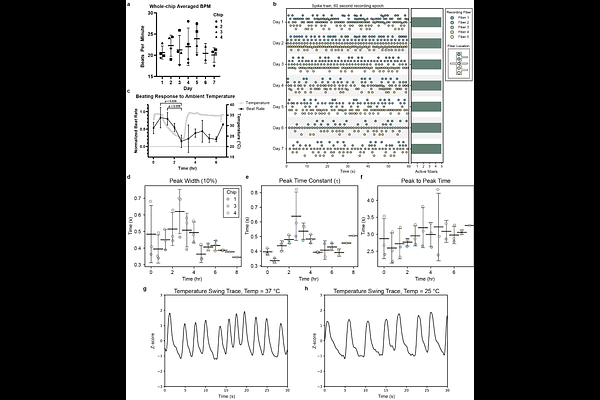
AbstractOrgan chips offer a disruptive innovation to study human diseases with tissue-specific resolution within a predictable and tunable in vitro environment. However, these platform technologies have for the most part failed to translate to broad use in the private sector due to a lack of high-throughput, user-friendly platforms. Here we present an automated high-throughput organ chip seeded with iPSC-derived cardiomyocytes transduced with GCaMP6f and interface with translational technologies to bridge the current academia-industry gap. Cardiomyocytes were seeded on-chip fully hands-free using an entry-level fluid handling robot to significantly reduce user handling requirements. Pipette interfaces were paramount to facilitating seeding and feeding through improved tolerances for establishing a functional connection to dispense and collect small fluidic volumes. Following successful seeding, GCaMP6f activity on-chip was monitored with our automated, non-invasive fiber-optic sensing platform. We show a significant decrease in cardiomyocyte beat rate in response to decreased ambient culture temperature using data collected with our optical sensing platform. This study provides a potential translational blueprint for academia-industry partnership toward broad adoption of organ chip technology in drug development and disease modeling.