ImmTACs overcome cytotoxic T cell suppression

ImmTACs overcome cytotoxic T cell suppression
Huynh, L.; Aljohani, A.; Alsubaiti, A.; Grant, T.; Chapman, A.; Philips, G.; Chamberlain, J.; Hayward-Wills, A.; Jungwirth, U.; Salio, M.; Holland, C. J.; Wuelfing, C.
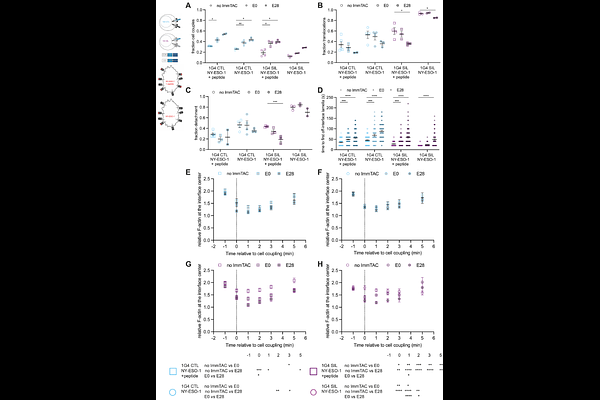
AbstractImmune mobilizing monoclonal TCR against cancer (ImmTAC) are cancer therapeutics that activate T cells through recognition of a tumor-associated antigenic MHC/peptide complex. A first-in-class ImmTAC, Tebentafusp, is approved for the treatment of metastatic uveal melanoma. While clinical efficacy is thus established, the cellular mechanisms underpinning ImmTAC action are not fully resolved. Using a recently established experimental strategy to generate suppressed human primary cytotoxic T lymphocytes (CTL), we have investigated an ImmTAC that recognizes a peptide derived from the tumor associated antigen NY-ESO-1 in comparison to direct engagement of a TCR recognizing the same MHC/peptide complex. In response to endogenous antigen presentation, ImmTACs could elicit tumor cell cytolysis by suppressed CTL, but not IFN{gamma} secretion, in a manner dependent on the engager affinity for CD3{varepsilon}. ImmTACs enhanced the efficient execution of subcellular CTL polarization steps required for effective cytolysis and could trigger calcium signaling. These data establish that ImmTACs activate CTL similarly to direct engagement of a TCR by MHC/peptide and are likely to retain this capability under suppressive conditions such as in the tumor microenvironment.