IL-35 produced by dendritic cells via TIM-3-STAT3 signaling contributes to the development of visceral leishmaniasis

IL-35 produced by dendritic cells via TIM-3-STAT3 signaling contributes to the development of visceral leishmaniasis
Kumar, S.; Shubham, S.; Mishra, M.; Kumar, R.; Sen, P.
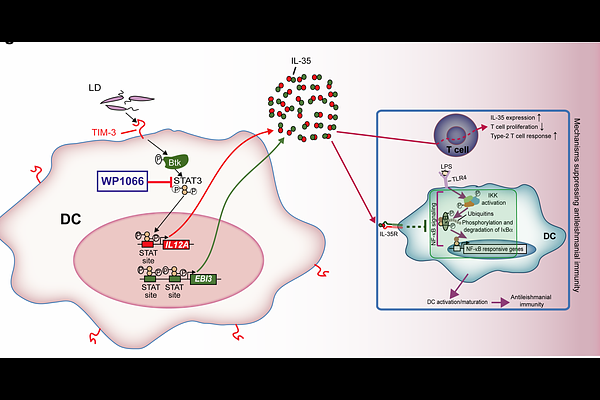
AbstractVisceral leishmaniasis (VL), a life-threatening parasitic disease caused by Leishmania donovani (LD), progresses primarily due to profound immunosuppression. However, the molecular and cellular mechanisms underlying this immune dysfunction remain poorly defined. Here we show that early production of IL-35 by dendritic cells (DCs) is critical for immunosuppression and disease pathogenesis during LD infection. LD stimulated IL-35 expression in DCs through the TIM-3 receptor and the downstream transcription factor STAT3. IL-35 produced by DCs subsequently suppressed DC maturation and T cell proliferation, propagated immunosuppression by inducing IL-35 expression in T cells, and impaired type-1 anti-leishmanial immunity, thereby promoting disease progression. Genetic or pharmacologic inhibition of STAT3 markedly reduced IL-35 production by DCs, restored protective type-1 T cell responses, and promoted parasite clearance in vivo. Notably, treatment with WP1066, an FDA-designated orphan STAT3 inhibitor, significantly lowered parasite burden and disease severity in infected mice. Together, these findings uncover a previously unrecognized TIM-3-STAT3-IL-35 axis that drives immunosuppression and pathogenesis in VL and highlight STAT3 inhibition as a promising therapeutic strategy to restore host immunity and control infection.