RNAi reveals a unique kinesin mediating chloroplast motility in the giant cytoplasm of Bryopsis, a coenocytic green alga

RNAi reveals a unique kinesin mediating chloroplast motility in the giant cytoplasm of Bryopsis, a coenocytic green alga
Ogawa, H. A.; Ochiai, K. K.; Shirae-Kurabayashi, M.; Yamada, M.; Goshima, G.
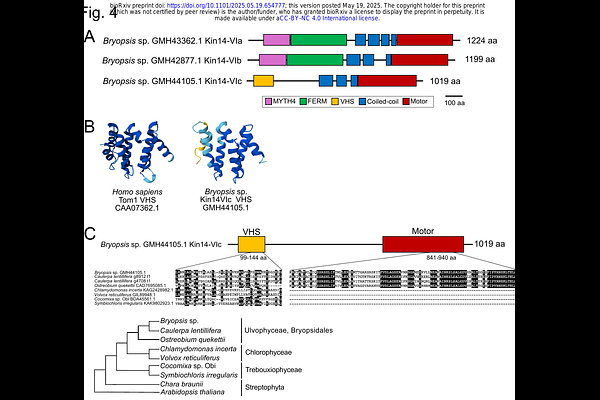
AbstractRNA interference (RNAi) is a powerful tool for protein knockdown and is widely used in model animals and plants. Here, we applied this technique to Bryopsis, the green feather alga that develops a >10 cm coenocytic body in the wild and in laboratory culture. We mixed in vitro-transcribed double-stranded RNA (dsRNA) with extruded cytoplasm in the presence of polyethylene glycol or injected it directly into the cytoplasm, followed by thallus regeneration. After several days, we observed a reduction in the target gene transcript as well as expected phenotypes, indicating the effectiveness of RNAi. We prepared dsRNAs for the sole myosin and all 34 kinesin genes of the model Bryopsis strain, and performed RNAi and time-lapse microscopy to trace chloroplast movement. In addition to KCBP-type kinesins known to drive retrograde chloroplast transport in land plants, RNAi of a Bryopsidales-specific kinesin-14 (Kin14VIc) almost completely suppressed chloroplast motility. Cytoplasmic microtubules remained broadly aligned parallel to the main axis of the thallus following Kin14VIc RNAi. Purified Kin14VIc motor protein showed microtubule-gliding activity and, when artificially tetramerised, processive motility in vitro (~250 nm/s), similar to plant KCBP. Thus, this study introduces a powerful gene loss-of-function tool in a coenocytic organism and identifies a uniquely evolved kinesin as a critical driver of chloroplast motility in the giant cytoplasm.