Endosome-escaping engineered LNP-miR146a with in vivo biodistribution to mitigate inflammation and foreign body giant cell formation

Endosome-escaping engineered LNP-miR146a with in vivo biodistribution to mitigate inflammation and foreign body giant cell formation
Khan, M. I.; Sankaran, K. R.; Rahaman, S. O.
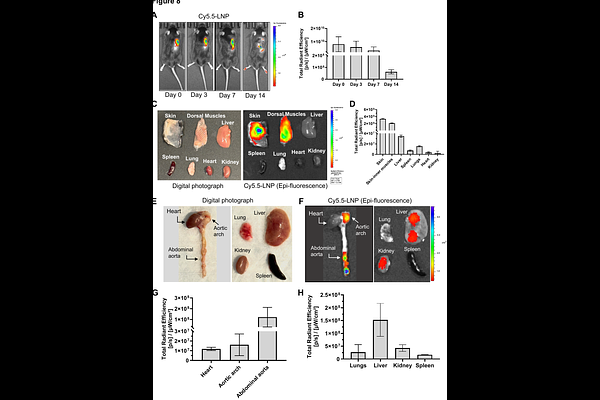
AbstractNanomaterial-enabled delivery systems have transformed therapeutic strategies for treating inflammatory and degenerative diseases by enabling targeted delivery of small molecules and nucleic acids. However, the clinical translation of microRNA (miR) therapeutics remains limited by instability, enzymatic degradation, and inefficient intracellular delivery in biological environments. Here, we present the design and validation of a next-generation lipid nanoparticle (LNP) platform optimized for the stable and effective delivery of the anti-inflammatory microRNA miR-146a. This LNP system is produced using a scalable lipid injection-based formulation method and yields nanoparticles with uniform size distribution and exceptional physicochemical stability across a wide pH range (2.5-8) and in serum-containing conditions. The four-component lipid architecture enables high miR-146a loading efficiency, efficient endo/lysosomal escape, and robust cellular internalization, resulting in effective tissue uptake and biodistribution both in vitro and in vivo. Importantly, LNP-mediated delivery of miR-146a exhibits excellent biocompatibility and potent anti-inflammatory activity in primary cells and animal models. Collectively, these results suggest this LNP-miR146a platform as a stable, efficient, and translatable approach for modulating inflammation and addressing biomaterial-associated inflammatory responses.