Vaccination reduces shedding of salmonid alphavirus subtype 3, but bacterial co-infection influences the effect

Vaccination reduces shedding of salmonid alphavirus subtype 3, but bacterial co-infection influences the effect
Grove, S.; Morton, H. C.; Kannimuthu, D.; Roh, H.; Chovatia, R. M.; Penaranda, M. M.; Ghebretnsae, D.; Skaftnesmo, K. O.
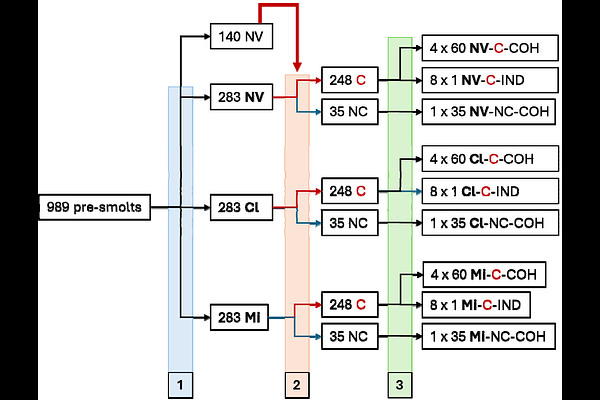
AbstractWaterborne horizontal transmission of viral diseases in fish relies on the release of infectious virus particles (termed shedding) into the aquatic environment. Both the rate and duration of shedding are critical for efficient viral spread, making interventions that reduce shedding valuable for disease control. While vaccines primarily aim to protect individuals from infection and severe disease, they should ideally also limit pathogen transmission by reducing shedding. In this study, we evaluated the capacity of two commercial vaccines - Clynav (DNA vaccine) and AlphaJect Micro 1-PD (inactivated whole-virus vaccine) - to reduce Salmonid alphavirus subtype 3 (SAV3) shedding following experimental infection of Atlantic salmon post-smolts. In individually housed fish, the AlphaJect Micro 1-PD vaccine significantly reduced the proportion of SAV3-shedding fish, the duration of shedding, and the cumulative shedding. The Clynav vaccine significantly reduced the shedding duration and also reduced the proportion of shedding fish. In cohort tanks with concurrent Tenacibaculum dicentrarchi co-infection, the AlphaJect Micro 1-PD vaccine significantly reduced the cumulative shedding but increased the number of shedding days. These results demonstrate the potential of vaccines to limit SAV3 transmission, while also highlighting how co-infections likely influence vaccine efficacy.