Ferroptosis links α-synuclein pathology across brain and skeletal muscle in Parkinsons disease

Ferroptosis links α-synuclein pathology across brain and skeletal muscle in Parkinsons disease
Bisht, K. S.; Sharma, J.; Kharbanda, N.; Biswas, A.; Mathew, S. J.; Maiti, T. K.
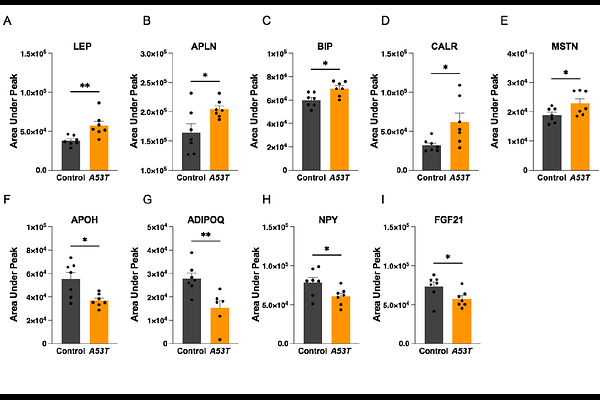
AbstractParkinsons disease (PD) is increasingly recognized as a multisystem disorder, yet the mechanisms linking neurodegeneration with muscle dysfunction remain largely unknown. In this study, using an A53T -synuclein (Syn) transgenic mouse model, we demonstrate coordinated pathological changes across the brain-muscle organs characterized by systemic inflammation, iron accumulation, oxidative stress, and ferroptosis-associated lipid peroxidation. Our quantitative proteomics data revealed dysregulated iron metabolism and ferroptosis in the brain and skeletal muscle. Biochemical validation confirmed increased expression of Transferrin receptor 1 (TFRC), elevated lipid peroxidation, and suppression of antioxidant defenses, including SLC7A11 and GPX4, indicating enhanced ferroptotic susceptibility. Cell-surface proteomics and biophysical assays further revealed that pathological Syn directly interacts with TFRC, promoting iron accumulation and ferroptosis-associated oxidative damage in neuronal and muscle cells. Together, our findings identify ferroptosis as a shared pathological mechanism across the brain and muscle, mediated by the Syn-TFRC interaction, thus linking neurodegeneration and peripheral muscle pathology in PD.