Investigating the mechanism of resistance to indaziflam in Poa annua

Investigating the mechanism of resistance to indaziflam in Poa annua
Mahey, M.; Ozolins, M.; Miranda-Teo, J.; Moretti, M.; Brosanan, J. T.; Lundquist, P. K.; Patterson, E.
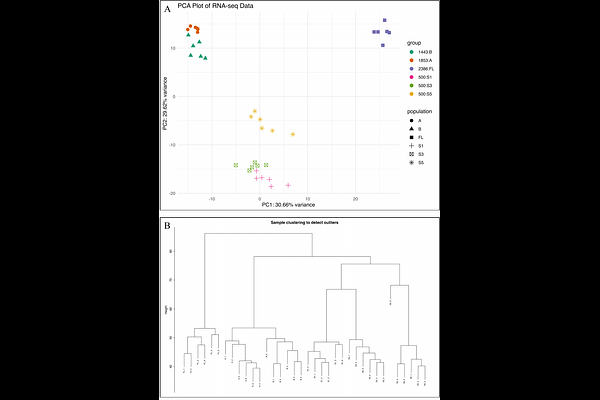
AbstractIndaziflam is an effective herbicide for controlling Poa annua, a weed, in turfgrass, orchards, and rangelands. An RNA-seq analysis was performed to identify differentially expressed genes associated with indaziflam-resistance in P. annua populations, with heterologous transformation performed for validation of candidate gene. Additionally, whole transcriptome variant calling was used to determine potential target site mutations. Transcriptome data were analyzed using weighted gene co-expression network analysis, Multiple modules were identified with high correlation to ED50 values of the resistant and susceptible populations. A cytochrome P450, CYP81A91_A, was identified that was homologous to CYP81A10 that confers resistance to five different herbicidal modes of action in Lolium rigidum. A single nucleotide polymorphism (SNP) causing an amino acid change (Thr432Arg) in coatomer subunit {gamma} was identified P. annua populations and several others originating from orchards. The up-regulated and positively correlated CYP81A91_A identified, when transformed to Arabidopsis thaliana, did not provide resistance to indaziflam; however, it did provide multifold resistance to simazine, another triazine class herbicide from a different MOA. A SNP in coatomer subunit {gamma} (Thr432Arg) was identified that may provide target site resistance given that coatomer proteins are involved in vesicle trafficking and in recycling of the cellulose synthase.