Protein Phosphatase 2A Orchestrates Mitochondrial Dynamics via MAPK Signaling in heart

Protein Phosphatase 2A Orchestrates Mitochondrial Dynamics via MAPK Signaling in heart
Dong, D.; Zhang, Y.; Li, L.; Fan, H.; Jin, T.; Gao, X.; Zhang, Z.
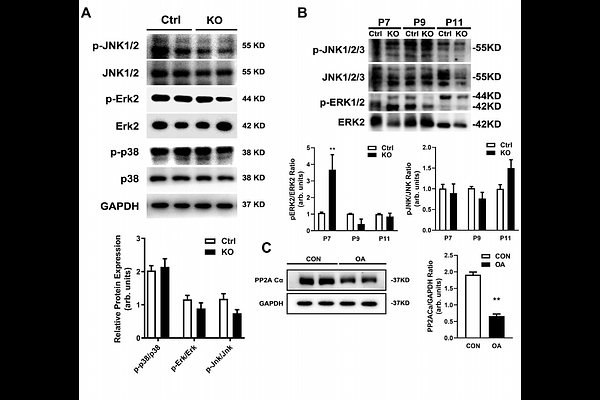
AbstractHeart as one high ATP consuming organ accounts for 5% of the total oxygen demands. The central question of heart health is how mitochondria fit its needs. Impaired mitochondrial dynamics (fission and fusion) have been observed in failing heart, but whether and how phosphorylation events involved in mitochondrial quality control are still imperceptive. The phosphatase 2A catalytic subunit (PP2A c) cardiac-specific knockout mouse (KO), which exhibited a hypertrophic cardiomyopathy phenotype, was studied. We profiled the pattern of morphological and functional alteration of cardiac mitochondria that appeared during postnatal development. Increased heterogeneity of mitochondria and a decreased ATP yield was displayed. Notably, a fission procedure escalated. To illustrate the protagonist of the mitochondrial dynamics, we applied a high-throughput spectrometry-based phosphoproteomic screening following by GO and KEGG pathway annotations for 788 phosphosites, accounting for 90 proteins. Results suggested that the MAPK signaling may be a predominant factor associated with those mitochondrial alternations in KO hearts. Furthermore, we identified hyperphosphorylated ERK2 accumulated into the nucleus regarding PP2Ac depletion. Consequently, Fis1 expression was accelerated at the transcriptional level which facilitated recruitment of Drp1 onto the outer mitochondrial membrane. The mitochondrial fission towards shifting led to excessed mitophagy and is considered the culprit in early mortality. These findings are indicative of the fundamental role of PP2A in mitochondrial dynamics regulation and cardiomyopathy progression. During the progression of heart failure, the phospho-regulation of ERK2 could be a novel therapeutic approach to prevent or attenuate adverse hypertrophic cardiomyopathy.