Variability amongst maize genotypes treated with neonicotinoid and stored

Variability amongst maize genotypes treated with neonicotinoid and stored
Reis, V. U. V.; Tavares, G. I. S.; Pereira, M. S. R.; Avelar, S. A. G.; Cirillo, M. A.; Souza, G. A. d.; Carvalho, E. R.
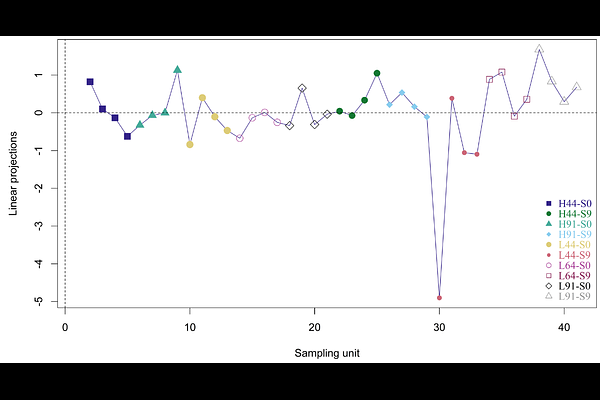
AbstractNeonicotinoid insecticides used in seed treatment present phytotoxic potential that may accelerate seed deterioration during storage; however, how this effect interacts with genotype remains poorly understood. We evaluated the physiological quality of five maize genotypes sourced from the Maize Breeding Programme of the Federal University of Lavras, comprising three inbred lines (L44, L91 and L64) and two half-sib hybrids (H44 and H91), treated with a neonicotinoid-based insecticide formulation (thiamethoxam and cyantraniliprole) and stored for up to nine months at 25C. Physiological quality was assessed through germination on rolled paper + vermiculite, cold test, primary root length, a phytotoxicity index, projection pursuit multivariate analysis, and scanning electron microscopy of pericarp and aleurone layer. Insecticide treatment reduced germination and increased phytotoxicity indices, with inbred line L44 showing the most severe response, reaching phytotoxicity values up to 15.89 percentage points above hybrid H91 at six months of storage. Scanning electron microscopy revealed that L44 presented a thinner pericarp and pronounced aleurone layer disorganisation following treatment, whilst L91 remained structurally preserved. Tolerance to post-treatment storage is highly genotype-dependent, and pericarp thickness may represent a useful morphological marker for selecting tolerant genotypes in maize breeding programmes.