A synNotch-based morphogen detection system reveals sFRP2 enhances Wnt3a signaling

A synNotch-based morphogen detection system reveals sFRP2 enhances Wnt3a signaling
Mizuno, K.; Toda, S.
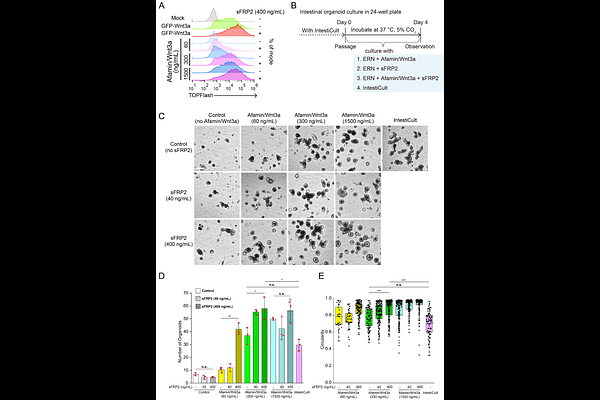
AbstractMorphogen gradients provide essential positional information during tissue development, yet the extracellular mechanisms that regulate morphogen transport and presentation remain poorly understood. Here, we introduce a mechanosensitive detection system based on synthetic Notch (synNotch) receptors that selectively detects surface-bound, but not soluble, morphogen complexes. Applying this platform to Wnt signaling, we demonstrate that secreted Frizzled-related protein 2 (sFRP2) promotes the recruitment of Wnt3a to the cell surface via heparan sulfate proteoglycans, enabling coordinated endocytosis and robust activation of canonical Wnt/{beta}-catenin signaling. Notably, sFRP2 extends the effective signaling range of Wnt3a and amplifies Wnt responses under ligand-limiting conditions. In intestinal organoid cultures, sFRP2 enhances Wnt3a-driven growth and induces high-Wnt morphological states with low-level Wnt concentrations. These findings identify sFRP2 as an extracellular carrier that stabilizes surface-bound Wnt3a and regulates both the strength and spatial range of Wnt signaling. More broadly, this work demonstrates the utility of synNotch mechanosensing for dissecting extracellular morphogen dynamics and highlights morphogen carrier proteins as a platform for optimizing organoid culture.