SKIN AS A POTENTIAL ENTRY POINT FOR SARS-COV-2

SKIN AS A POTENTIAL ENTRY POINT FOR SARS-COV-2
Trubestskoy, D.; Grudzien, P.; Chudakova, D.; Klopot, A.; Bhalla, P.; Perez-White, B.; Budunova, I.
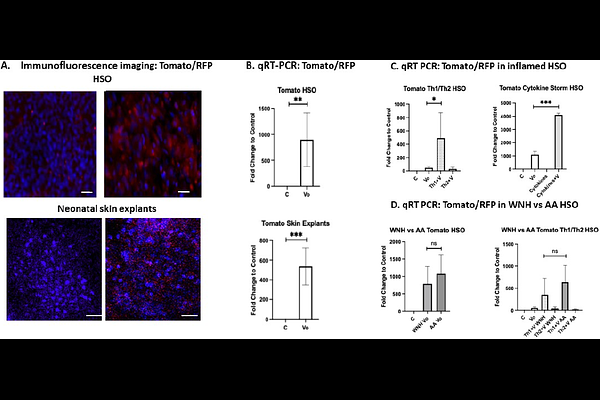
AbstractThe primary route of SARS-CoV-2 entry is via respiratory epithelium. However, many COVID-19 patients developed dermatological lesions, and SARS-CoV-2 RNA has been detected in the patients skin. Inflammatory skin diseases, psoriasis and atopic dermatitis (AD), significantly increased the risk of COVID-19. To evaluate the potential role of skin in SARS-CoV-2 host interactions, we utilized 3D human skin organoids (HSO) generated from human epidermal keratinocytes, as well as neonatal skin explants. HSO were treated with cytokines involved in acute and chronic skin inflammation and cytokine storm in severe COVID-19 disease, TNF-, IL-6, IL-1{beta}, and IFN-{gamma}, individually and in combination. HSO were also treated with Th1 (TNF- + IL-17) and Th2 (IL-4 + IL-13) cocktails inducing pro-psoriasis and pro-AD HSO changes, respectively. All individual cytokines, and especially their combinations, elevated the expression of ACE2 and TMPRSS2 at mRNA/protein levels. The Th2 in-duced only TMPRSS2, the Th1 predominantly induced ACE2. Topically applied Spike-pseudotyped lentiviral Tomato reporter, which binds ACE2 similarly to SARS-CoV-2, successfully infected control and cytokine-treated HSO as well as neonatal skin explants. Cytokine treatment, especially TNF- + IL-6 + IL-1{beta} + IFN-{gamma} and the Th1, significantly increased viral entry. Transcriptomic analysis further revealed partial overlap between gene expression signatures induced by Spike-mediated entry in inflamed HSO and those observed in lung tissue from COVID-19 patients, supporting the biological relevance of skin models. Together, these findings demonstrate that inflammation enhances the permissiveness of human skin to SARS-CoV-2 entry, suggesting that the skin may represent a pre-viously underappreciated interface in viral host interactions.