Aquaporin-4 mislocalization from astrocyte endfeet prolongs survival in a prion-cerebral amyloid angiopathy model

Aquaporin-4 mislocalization from astrocyte endfeet prolongs survival in a prion-cerebral amyloid angiopathy model
Flores, S.; Wilpitz, A.; Ojeda-Juarez, D.; Wang, J.; Danque, G.; Sumowski, P.; Funk, G.; Malik, A.; Pizzo, D. P.; Richards, E.; Iliff, J. J.; Sigurdson, C. J.
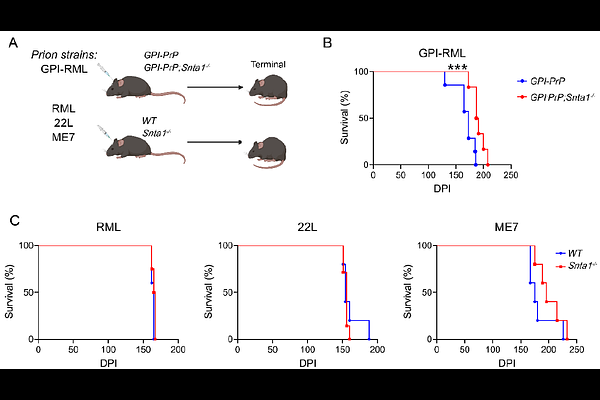
AbstractAquaporin 4 (AQP4) water channels are polarized to astrocytic endfeet at blood vessel interfaces, and lose polarity in vascular diseases, including stroke, chronic traumatic encephalopathy, and Alzheimer's disease. AQP4 modulates water influx and efflux in the interstitial fluid, yet how AQP4 localization impacts cerebral amyloid angiopathy (CAA) remains poorly understood. Here, we show that astrocytic end feet and AQP4 are displaced from amyloid-bearing vessels in a prion-CAA mouse model that expresses GPI-anchorless PrPC. Displacing AQP4 genetically through deleting alpha-syntrophin (Snta1-/-) led to a marked prolongation in survival, together with reduced microglial inflammation and C1q, in prion-CAA-affected mice. Additionally, synaptic structural proteins were better maintained. Finally, the level and distribution of prion aggregates were similar among the mice, indicating that prion conversion and spread were not affected. These results suggest that reducing AQP4 water channel function slows the decline in a vascular amyloid disease by reducing neuroinflammation.