Aging disrupts cumulus-oocyte NAD homeostasis

Aging disrupts cumulus-oocyte NAD homeostasis
Mihalas, B. P.; Lin, D.; Bustamante, S.; Pickford, R.; Frost, E. R.; Vuyyuru, A.; Wong, D. Y.; Bertoldo, M. J.; Wu, L. E.; Gilchrist, R. B.
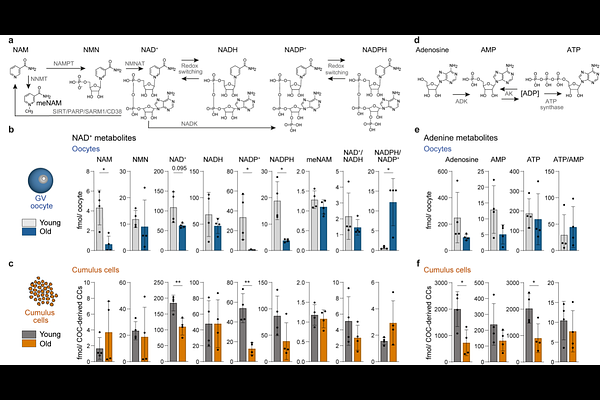
AbstractThe age-related decline in oocyte nicotinamide adenine dinucleotide (NAD) is associated with reduced developmental potential and female infertility. Despite the extraordinary longevity of the female germline, the mechanism for maintaining oocyte NAD remains unresolved. Here, we used stable isotope tracing to identify a new mechanism for shared, intercellular NAD biosynthesis, whereby somatic-germline metabolic coupling between the oocyte and its surrounding cumulus cells is critical to maintain oocyte NAD homeostasis. We show that this coupling deteriorates with reproductive aging, identifying altered NAD metabolism in cumulus cells from mice and women of advancing reproductive age. This cumulus-oocyte metabolic coupling of NAD biosynthesis contributes to protection against the age-related increases in oocyte reactive oxygen species (ROS). In intact complexes, restoring NAD through supplementation with the precursor nicotinamide mononucleotide (NMN) increased glutathione, reduced ROS and improved mitochondrial membrane potential in oocytes from aged mice and in oocytes exposed to oxidative insult. Importantly, the ability of NMN to resolve elevated ROS depends on the presence of cumulus cells. Together, this new model of somatic-germline metabolic coupling of NAD biosynthesis places an age-related deterioration in cumulus cell-mediated metabolic support as a key driver of impaired oocyte NAD levels and redox dysregulation with aging.