Comparative analysis of root morphology in several spinach (Spinacia oleracea) varieties: Field vs Hydroponic growth systems

Comparative analysis of root morphology in several spinach (Spinacia oleracea) varieties: Field vs Hydroponic growth systems
Camli-Saunders, D.; Russell, A. K.; Villouta, C.
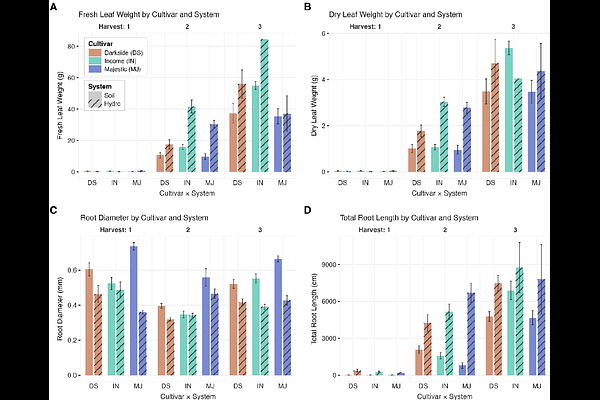
AbstractSpinach (Spinacia oleraceae) is a principal vegetable crop commercially grown in Controlled Environment Agriculture (CEA). Recent research suggests that root morphological and architectural differences among crop species influence yield, resource use efficiency, and environmental stress tolerance. These root traits may be exploited to increase yield, promote efficient nutrient use, and mitigate environmental stressors. This study measured differences between various spinach cultivars in CEA systems to reveal morphological and anatomical variation. We grew three spinach cultivars with different reported growing rates ("Income", "Darkside" and "El-Majestic") under NFT hydroponic and substrate-based systems in a controlled greenhouse environment over 45 days with destructive harvests at days 15, 30, and 45. Supplemental light (250 mol/m2/s) with 12-hour photoperiod and periodic fertigation was used. Harvests included the collection of leaf and root biomass, and scanning of root systems in WinRhizo software, measuring ten variables. On day 45, root cross-sections from orders 1-5 were embedded in JB-4 resin, sectioned, stained, and analyzed for diameter, vasculature, and rhizodermis characteristics. Results indicate that in spinach, differences in root system morphology are linked to cultivation systems over cultivar identity. Vascular and root anatomical alterations are minor compared to morphological differences in response to the cultivation system. Hydroponic-style growth systems are associated with the proliferation of fine-root ideotypes compared with substrate-based conditions. Such findings affirm previous studies, which suggest plastic root morphology in response to growth systems, and may be used to help create more resilient, resource-efficient cultivars.