Single-cell analysis of 2,3,7,8-tetrachlorodibenzo-p-dioxin (TCDD)-treated murine skin demonstrates that sebaceous gland differentiation precedes Ahr-dependent seboatrophy with elevated expression of infundibular Blimp1

Single-cell analysis of 2,3,7,8-tetrachlorodibenzo-p-dioxin (TCDD)-treated murine skin demonstrates that sebaceous gland differentiation precedes Ahr-dependent seboatrophy with elevated expression of infundibular Blimp1
Tasnim, S. M.; Solanki, S.; Bhuju, J.; Thompson, L.; Skalli, O.; Grice, E. A.; Sutter, C. H.; Sutter, T. R.
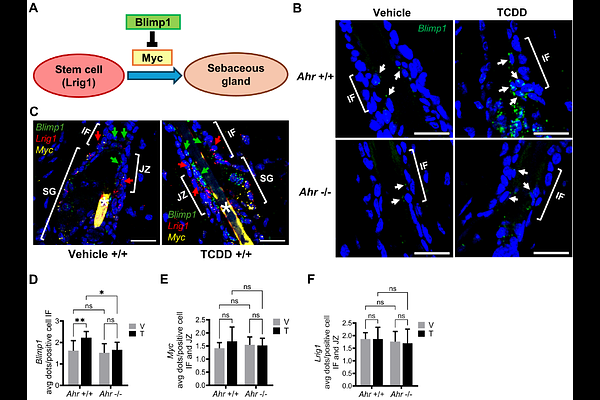
AbstractIn humans, 2,3,7,8-tetrachlorodibenzo-p-dioxin (TCDD) induces chloracne, a skin condition that presents with acanthosis, hyperkeratosis, comedones, and sebaceous gland (SG) atrophy (seboatrophy). Although chloracne-like phenotypes have been reported in TCDD-treated mice, the underlying mechanisms remain poorly understood. Previous studies showed that TCDD-induced CYP1A1 protein is expressed in LRIG1+ progenitor cells in hair follicles, suggesting that TCDD targets specific cell populations within the pilosebaceous unit. To explore the effects of TCDD on the epidermis and pilosebaceous unit, we analyzed single-cell RNA expression in wild-type and Ahr-null mice at postnatal day 21 (P21) following in utero and lactational exposure. The results showed that TCDD preferentially induced the AHR target genes Cyp1a1 and Cyp1b1 in the lower infundibulum and subjacent junctional zone overlapping the LRIG1+ progenitor cell niche. TCDD also caused Ahr-dependent seboatrophy, accompanied by increased expression of Blimp1, a transcriptional repressor that regulates SG size. A second site of Cyp1a1 induction was the SG, where Cyp1a1 was markedly elevated in the basal proliferating cells and immature sebocytes. In a 3-day topical exposure study of early effects, TCDD produced a dose-dependent increase of Cyp1a1 expression in the SG that included the more differentiated sebocytes. This response was accompanied by expansion of the Scd1-positive area, elevated Nile Red lipid staining, and an increased number of Blimp1-high sebocytes, demonstrating that TCDD enhanced SG differentiation and lipid production in vivo. These changes preceded the onset of Ahr-dependent seboatrophy, providing new insight into the cellular and molecular events underlying chloracne pathogenesis.