Texture Profile Analysis and Consumer Sensory Evaluation of Plant-Based and Conventional Breaded Shrimp

Texture Profile Analysis and Consumer Sensory Evaluation of Plant-Based and Conventional Breaded Shrimp
Koosis, A. O.; Kuhl, E.
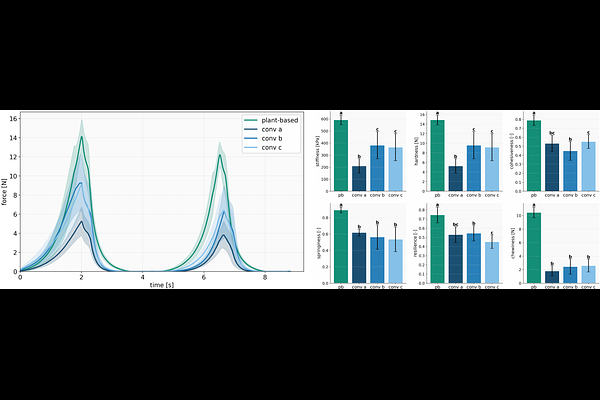
AbstractPlant-based seafood alternatives could reduce pressure on marine ecosystems, yet texture gaps between plant-based and conventional products limit consumer adoption. This study compared the textural properties and consumer acceptance of plant-based and conventional breaded shrimp to evaluate whether instrumental texture differences predict sensory differences. Texture Profile Analysis (TPA) was performed on four breaded shrimp products (n = 14--15 replicates per product), and consumer sensory evaluation (n = 107) used a within-subjects counterbalanced design assessing hedonic ratings, Just-About-Right attributes, Check-All-That-Apply descriptors, and purchase intent. TPA revealed that plant-based shrimp exhibited significantly higher hardness (14.9 +/- 1.0 N vs. 9.6 +/- 2.8 N), stiffness (592 +/- 40 kPa vs. 382 +/- 113 kPa), and chewiness (10.5 +/- 0.8 N vs. 2.5 +/- 1.1 N) compared to conventional shrimp (all p < 0.0001). However, consumer sensory evaluation revealed no significant differences between products for any hedonic attribute, JAR rating, CATA descriptor, or purchase intent (all p > 0.05 after FDR correction). Despite 1.6-fold greater hardness and 4.2-fold greater chewiness, plant-based breaded shrimp received comparable hedonic ratings to conventional shrimp, suggesting that the breaded format masks mechanical texture differences. Achieving TPA parity may not be necessary for consumer acceptance in breaded seafood applications.