Reassessing display behavior from Bels et al. (2025) given the complexity of anthropogenic hybridization and intraspecific diversity in Iguana iguana

Reassessing display behavior from Bels et al. (2025) given the complexity of anthropogenic hybridization and intraspecific diversity in Iguana iguana
van den Burg, M. P.; Thibaudier, J.
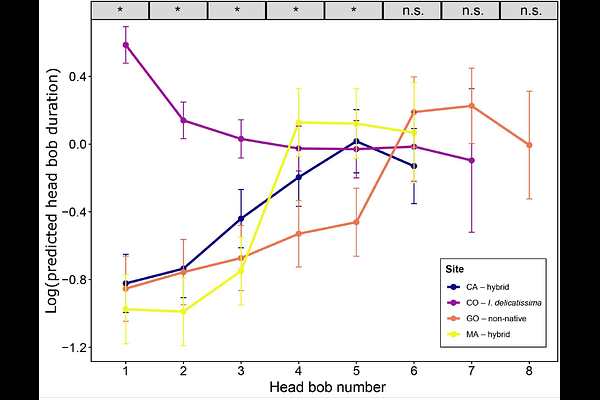
AbstractUnderstanding behavioral differences between non-native and closely related endangered species could be important to aid conservation management. In volume 169 of Zoology, Bels et al. (2025) reported on their comparison of display-action-patterns (DAP) between native Iguana delicatissima and non-native iguanas present on islands of the Guadeloupe Archipelago in the Caribbean Lesser Antilles. Here, we address conceptual and methodological concerns about their work and reanalyze their data given our proposed corrections, primarily a literature-informed adjustment of their "species" category. We additionally utilize online videos from South American mainland I. iguana populations, from where the non-native iguanas in the Guadeloupe Archipelago originate, to better understand the different DAPs between native and non-native iguanas in the Guadeloupe Archipelago. Significant differences in DAP characteristics among "species" categories (native I. delicatissima, non-native iguanas, and hybrids) show that Bels et al. (2025) oversimplified their data analyses by merging all non-native populations into one group. This result indicates the presence of behavioral variation among subpopulations within widely hybridizing iguanid populations, which has been poorly studied. Additionally, videos from mainland populations across two major mitochondrial clades of Iguana iguana show that non-native iguanas on Guadeloupe retained DAP characteristics of those populations from which they originate. We discuss these findings in light of the proposed hypotheses put forward by Bels et al. (2025), of which two can be excluded. Overall, our reanalysis shows that studies focusing on characteristics within settings of complex hybridization in diverse species should acknowledge this complexity.