Usherin in the pineal gland: altered sleep in zebrafish models of Usher syndrome type 2a

Usherin in the pineal gland: altered sleep in zebrafish models of Usher syndrome type 2a
Hendricks, J. M.; Choudhary, V.; Heller, C. R.; van Gemert, M.; Hornikx, D. L. A. H.; Broekman, S.; Peters, T.; Zethof, J.; Hensman, J.; Boon, C. J. F.; Robson, D. N.; Li, J. M.; Ligterink, R.; Kleinhout-van Vuuren, A.; Endenburg, S. C.; Boss, H. M.; Collin, R. W. J.; Metz, J. R.; de Vrieze, E.; van Wijk, E.
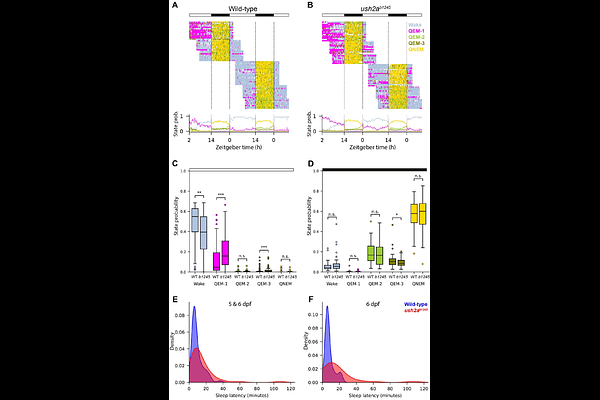
AbstractUsher syndrome type 2A (USH2a), the most common form of hereditary deaf-blindness, is frequently accompanied by fatigue and poor sleep quality. As these sleep problems occur independently of visual decline, it is hypothesized that the USH2A-encoded protein usherin regulates sleep and circadian rhythmicity via an extra-retinal mechanism. Ush2a knockout zebrafish models were utilized to investigate this hypothesis. Immunohistochemical analysis demonstrated usherin localisation in pineal gland photoreceptor cells in wild-type larvae, alongside the USH2 complex proteins Adgrv1 and Whrna. Cross-species transcriptomic and proteomic analyses confirmed USH2A expression in all mammalian pineal gland tissues studied. Circadian clock gene expression was measured over 24 h and showed preserved oscillatory patterns in wild-type and mutant zebrafish. Ex vivo superfusion of pineal glands revealed sustained circadian melatonin release with comparable phase and period to controls, although potential differences in absolute melatonin levels could not be excluded. Despite intact clock gene expression and melatonin release in ush2a mutants, behavioural classification over 24-h recordings revealed altered sleep-wake behaviour: ush2a mutants displayed elevated daytime sleep and significantly prolonged and more variable sleep latency. The dissociation between intact molecular rhythms and abnormal sleep behaviour likely implicates that usherin plays a role in sleep-wake regulation independent of the circadian pacemaker and melatonin synthesis. These findings suggest a novel role of usherin in the pineal gland and establish a mechanistic link between usherin dysfunction and sleep disturbances, providing a biological basis for the fatigue and sleep problems reported in USH2a patients.