Physiological and behavioural characterisation of a novel steroid sulfatase-deficient mouse

Physiological and behavioural characterisation of a novel steroid sulfatase-deficient mouse
Humby, T.; Shepherd, F. R.; Elgie, T.; Anderson-Watkins, L.; Beevors, L. I.; Taylor, A. E.; Foster, P. A.; Davies, W.
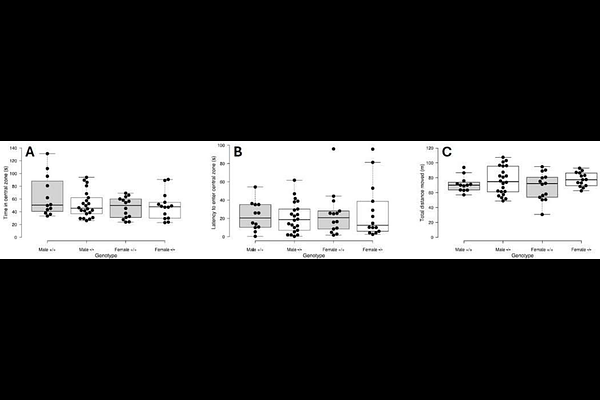
AbstractBackground: Steroid sulfatase (STS) cleaves sulfate groups from steroid hormones. In humans, STS deficiency is associated with X-linked ichthyosis (a dermatological disorder), neurodevelopmental/mood conditions, and cardiac arrhythmias. Until recently, no single-gene knockout mammalian model existed to investigate these associations; previous work in such a model has been limited to skin phenotypes. Methods: We generated a novel C57BL/6J mouse model with a deletion in critical exon 2 of Sts. We then examined gene expression and enzyme activity in liver and brain samples of homozygous mice, and assessed the breeding performance and health of male and female deletion-carriers. Subsequently, we compared performance across a range of behavioural paradigms in wildtype and homozygous male and female mice: elevated plus maze, open field, rotarod, spontaneous alternation, and acoustic startle/prepulse inhibition. We also investigated serum steroid hormone levels by liquid chromatography-mass spectrometry and measured heart weights and two morphological indices (bodyweight/tibia length) post mortem. Results: Homozygous mice almost completely lacked STS expression/activity. Genetically-altered mice exhibited grossly-normal breeding performance, health, and endocrinology. Homozygous mice were more active, and had higher normalised heart weights, than wildtype mice. We also found significant genotype x sex interactions on bodyweight, and on two behavioural measures (potentially reflecting lower anxiety in homozygous males and heightened anxiety in homozygous females). Conclusions: The Sts-deletion mouse represents an experimentally-tractable model in which to identify and characterise phenotypes associated with STS deficiency. The mechanistic basis of the genotype-phenotype associations described here requires further investigation, and whether such associations translate to humans remains to be tested.