NAD boosting mediated by CD38 inhibition drives reversal of a pathological vicious cycle of intracrine activity and inflammation in eyelid meibomian gland dysfunction

NAD boosting mediated by CD38 inhibition drives reversal of a pathological vicious cycle of intracrine activity and inflammation in eyelid meibomian gland dysfunction
Hamada, Y.; Sakamoto, T.; Yarimizu, D.; Uehara, H.; Shao, X.; Macpherson, T.; Hasegawa, E.; Doi, M.
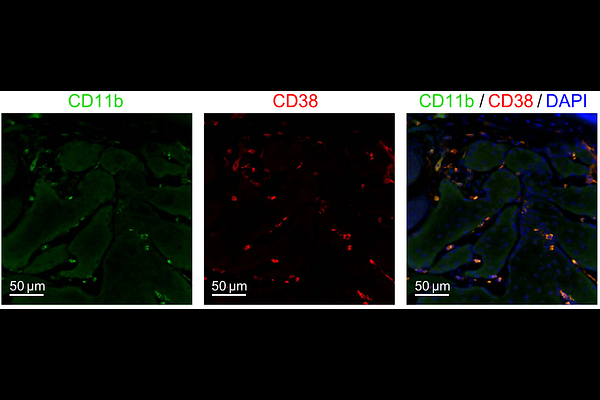
AbstractVicious cycles--reciprocal cause-and-effect loops that progressively intensify dysfunction--are implicated in many diseases. Here, we examined whether "intracrine" steroidogenesis, a tissue-local mode of hormone production, participates in a pathological vicious cycle in eyelid meibomian gland dysfunction (MGD), the most common cause of evaporative dry eye disease with incidence increasing with age. We show that loss of meibomian intracrine androgen production triggers inflammatory remodeling of the eyelid tarsal plate. Conversely, inflammation suppresses nicotinamide adenine dinucleotide (NAD)-dependent 3{beta}-hydroxysteroid dehydrogenase activity in the meibomian gland, thereby further weakening intracrine steroidogenesis. Mechanistically, we identified inflammation-associated accumulation of the NAD-degrading enzyme CD38 as a key down-regulator for the NAD-dependent intracrine activity. Accordingly, pharmacological inhibition of CD38 (using 78c) in aged mice, restores meibomian cellular NAD levels, rescues intracrine activity, suppresses inflammatory signatures, and promotes recovery of gland size. Thus, our data suggest that boosting NAD availability not only ameliorates meibomian gland dysfunction but also induces a reciprocal "virtuous" cycle, in which suppression of inflammation and restoration of intracrine activity mutually reinforce each other. These findings constitute a previously unknown example in which the reversal of a pathological vicious cycle into a beneficial virtuous cycle underlies the therapeutic effects of NAD boosting and may help combat age-associated meibomian gland disorder.