Ocular community state types reveal distinct microbial compositions among microbiomes with implications for trachoma control

Ocular community state types reveal distinct microbial compositions among microbiomes with implications for trachoma control
Uwamanzu-Nna, A.; Olagoke, O.; Shi, C. X.; Mengistie, H. D.; Asfaha, K.; Read, T. D.; Dean, D.
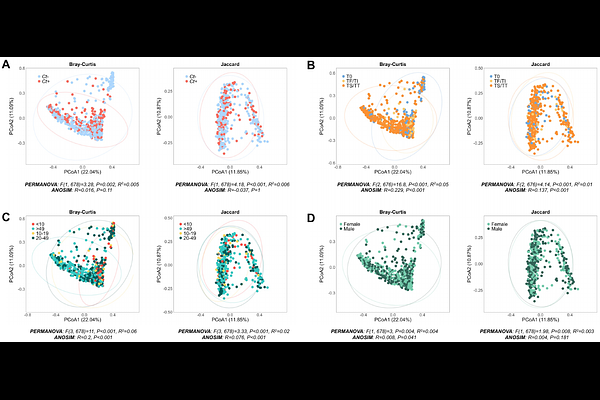
AbstractTrachoma, a chronic ocular disease caused by Chlamydia trachomatis (Ct), is the leading infectious cause of blindness worldwide. Despite the WHO SAFE (Surgery, Antibiotics, Facial cleanliness, Environmental improvement) strategy, ~100M are at risk of blindness. Using metagenomic shotgun sequencing, we characterized the ocular microbiome of 680 villagers in Amhara Ethiopia, identifying 10 Community State Types (CSTs) associated with different population characteristics. Children with the highest prevalence of inflammatory trachoma and Ct were in CST10, dominated by Haemophilus influenzae and four other Haemophilus spp. Adults with the highest prevalence of scarring trachoma were in CST3 and CST6, dominated by Corynebacterium macginleyi. CST5, dominated by Mesomycoplasma hyorhinis and Staphylococcus aureus, had the lowest prevalence of Ct and trachoma, and was the only CST without zoonotic Chlamydia spp. Both M. hyorhinis, a zoonotic porcine bacterium, and S. aureus are capable of forming biofilms, which may competitively prevent/down-regulate chlamydial infections. Other CSTs were dominated by environmental species like Vibrio. This is the first microbiome study to develop CSTs for trachoma. Pathogenic and potentially protective microbes showed distinct associations with demographic, clinical, and chlamydial characteristics, which will guide the design of microbial therapeutics as alternatives to antibiotics and strategies for the WHO global elimination of blinding trachoma program.