Seasonal changes in the population structure of Australpavlovskyella gurneyi, the kangaroo soft tick, associated with seasonal changes in the wallowing behaviour of the Osphranter rufus, the red kangaroo, and the weather

Seasonal changes in the population structure of Australpavlovskyella gurneyi, the kangaroo soft tick, associated with seasonal changes in the wallowing behaviour of the Osphranter rufus, the red kangaroo, and the weather
Barker, S. C.; Doube, B. M.
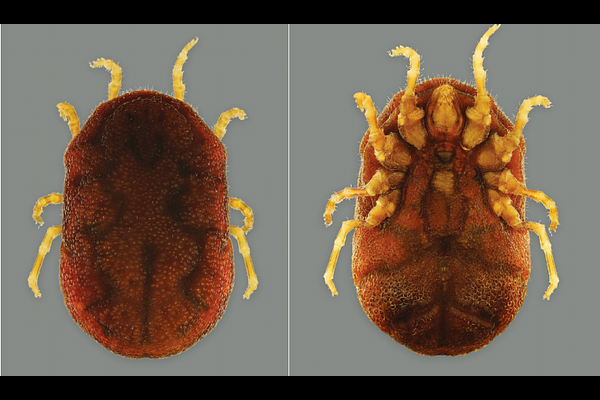
AbstractThe kangaroo soft tick, Australpavlovskyella gurneyi (Warburton, 1926), is found in sandy depressions (wallows, under desert shade trees, formed by the activity of the red kangaroo, Osphranter rufus, resting under shade trees (https://youtu.be/AYLoqqPsifc). The field biology of the tick was examined on Moralana Station in arid mid north, South Australia, between February 1969 and March 1971. The age of kangaroo dung in wallows showed that kangaroos visited wallows regularly during the hot summer and infrequently during the cooler months. All nymphal instars and adults were present at all times of the year in kangaroo wallows, but only a small proportion of the ticks present was trapped on any one occasion. Ticks were abundant in large kangaroo wallows under trees with dense shade, but scarce under smaller trees with sparse shade. The short lived larvae were present only during spring and early summer, indicating that the long-lived female ticks bred only during spring and early summer. Laboratory tests showed that field collected adult female ticks entered reproductive diapause from January to August (mid summer to late winter). Ticks placed in kangaroo wallows survived for at least one year without food. On Moralana Station, the population of first instar nymphs increased in summer and subsequently the population of second instar nymphs increased in early autumn, indicating that a life cycle could be completed in 2 to 3 years.