Overlapping MHC class I/II Epitopes Program cDC1-like Differentiation of Monocyte-Derived Dendritic Cells via mTORC1 Signaling Inhibition

Overlapping MHC class I/II Epitopes Program cDC1-like Differentiation of Monocyte-Derived Dendritic Cells via mTORC1 Signaling Inhibition
Amanya, S. B.; Murthy, A.; Bisht, N.; Bullock, Z. N.; Ernste, K. J.; Vazquez-Perez, J.; Liu, W.; Trivedi, A. J.; Oyewole-Said, D.; Paul, A.; Umokoro, L.; Akhanov, V.; Samuel, M.; Shi, Z.; Nguyen, M. H.; Jeong, M.; Iakova, P. A.; Jain, A.; Pham, K. T.; Kraushaar, D.; Konduri, V.; Decker, W. K.
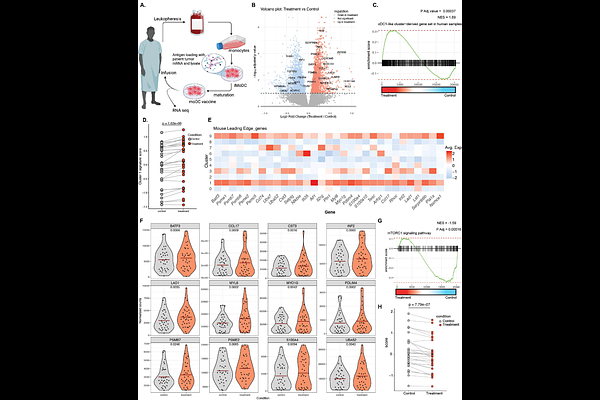
AbstractViral infection polarizes monocyte derived dendritic cells (moDC) to initiate type 1 immunity. The availability of overlapping (homologous) MHC class I and II epitopes, an occurrence frequently and primarily associated with intracellular infection, significantly enhances this process; however, the underlying mechanism(s) are unclear. We demonstrate that moDC loaded with homologous MHC epitopes acquire a cDC1-like phenotype in a process governed by mTORC1. mTORC1 pathway inhibition leads to NF-kB-mediated expression of IL-12 and other type I immune polarizing genes. The observed cDC1-like gene signature was also significantly enhanced in clinical moDC vaccine products made through methodologies that enforced class I and II antigenic homology. Collectively, these findings reveal a novel and previously unrecognized mechanism of immune governance that might also be exploited in cancer immunotherapy.