Addressing viral genomic variability towards developing a Cas13b-based therapy

Addressing viral genomic variability towards developing a Cas13b-based therapy
Le, M. A. T.; McCoullough, L. C.; Janetzki, Z. T.; Liaw, Y. W.; Fareh, M.; Trapani, J. A.; Revill, P. A.; Littlejohn, M.
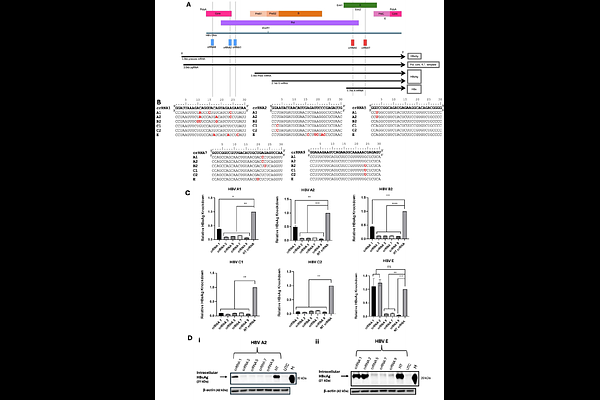
AbstractViral genome diversity may limit the effectiveness of antiviral RNA-editing tools such as CRISPR-Cas13 that can be used to destroy specific mRNA targets, by introducing mismatches between viral RNA targets and CRISPR guide RNAs (crRNAs). These mismatches can reduce target recognition and cleavage efficiency, diminishing antiviral activity and increasing the risk of viral escape. The extent to which natural viral genomic variability limits CRISPR-Cas13 efficacy remains unclear. Here, we used hepatitis B virus (HBV), which has substantial genetic diversity, as a model to assess the impact of viral genome variation on Cas13b activity in vitro. The efficacy of PspCas13b was examined across six HBV genotypes and sub-genotypes using five crRNAs that had up to five mismatches to the target region. We showed that crRNAs with one mismatch to the target strongly suppressed viral antigen expression for all genotypes tested, while some crRNAs with three or more mismatches were less effective. Restoring complementarity using spacer-target mutagenesis improved the level of knockdown for some but not all HBV genotypes, suggesting that sequence specificity alone did not control PspCas13b efficacy. Our findings show that a one size fits all approach for PspCas13b-mediated treatment of HBV is unlikely to be effective, but the impact of sequence variability on PspCas13b efficacy can be readily addressed through appropriate design of crRNAs. This approach will likely be necessary for all viral pathogens with highly variant genomes.