The magnitude of the secondary B cell response is primarily defined by antibody feedback inhibition rather than the number of memory B cells present

The magnitude of the secondary B cell response is primarily defined by antibody feedback inhibition rather than the number of memory B cells present
Hoormann, M. J.; Becza, N.; Yao, L.; Anton V. Gorbachev, A. V.; Kuerten, S.; Tary-Lehmann, M.; Kirchenbaum, G. A.; Lehmann, P. V.
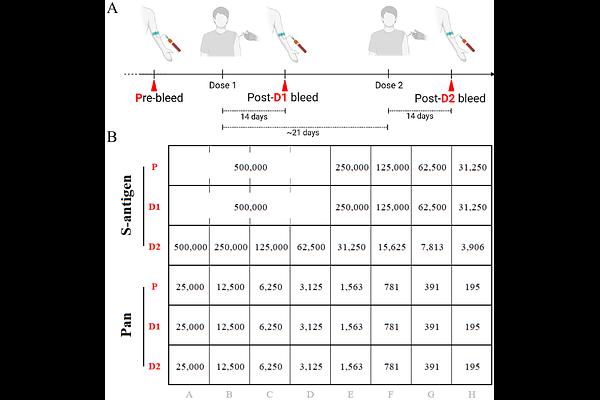
AbstractClonal expansion of memory lymphocytes after each antigen encounter is the primary mechanism for amplifying immunity. For most vaccines, boosters are common practice and are expected to stimulate proliferation of pre-existing memory B cells (Bmem), thereby expanding the antigen-specific Bmem pool, along with driving their differentiation into antibody-producing plasma cells that replenish antibody titers. It is widely assumed that the number of Bmem present in the body prior to administration of a booster vaccination will define the magnitude of the ensuing response. However, due to technical limitations hampering reliable detection of rare antigen-specific Bmem in human subjects, the extent to which Bmem numbers are actually modulated following a booster vaccination remains unclear. By comparing Bmem frequencies and antibody titers in the same individuals after primary and secondary vaccination with SARS-CoV-2 Spike (S-antigen)-encoding mRNA we found that expansion of Bmem and the magnitude of the secondary antibody response were not determined by the number of Bmem measured before the second vaccine inoculation. Instead, both were inversely correlated with levels of S-antigen-specific serum IgG prior to the secondary antigen exposure. Collectively, the data suggest that secondary B cell responses are constrained by antibody feedback inhibition of Bmem, rather than their paucity.