Pi16+ fibroblast-derived Csf1 shapes skin topography

Pi16+ fibroblast-derived Csf1 shapes skin topography
Altieri, A.; McCartney, E. E.; Hakim, S. W.; Jiang, J.; Buechler, M.
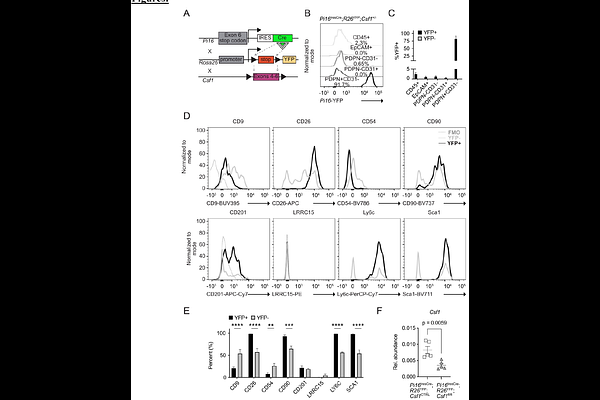
AbstractPeptidase inhibitor 16 (Pi16)-expressing fibroblasts are found across tissues and species, but their functional role is unclear. As fibroblasts and macrophages have been proposed to exist in a reciprocal circuit, we hypothesized Pi16+ fibroblasts may regulate macrophage homeostasis. Flow cytometry revealed ~80% of skin fibroblasts express Pi16, leading us to investigate the role of these cells in maintaining a macrophage niche in this tissue. We generated an in vivo system where fibroblast-derived Colony Stimulating Factor 1 (Csf1) was constitutively eliminated in Pi16+ fibroblasts by crossing animals with a Csf1fl/fl allele to mice in which the gene Pi16 drives an IresCre cassette. Deletion of Csf1 in Pi16+ fibroblasts resulted in significant diminishment of CD64+ and CD11c+ macrophages alongside expansion of PDPN+YFP+ fibroblasts. Alterations in cell population dynamics coincided with thickening of both the dermis and fascial compartments of the skin. Deletion of Csf1 in Pi16+ fibroblasts delayed early wound healing in a unsplinted mouse model. Loss of PI16+ fibroblasts was observed in individuals with limited (lSSc) and diffuse (dSSc) systemic Scleroderma compared to healthy controls. These findings suggest that loss of Csf1 in Pi16+ fibroblasts elicit changes in the population dynamics of skin macrophages and modifications to tissue architecture.