By: Geoffrey Compère, Sk Jahanur Hoque
By: Hugo Candan, Philippe Grandclement
By: Wentao Liu, Di Wu, Shao-Wen Wei, Yu-Xiao Liu
By: José Barrientos, Adolfo Cisterna
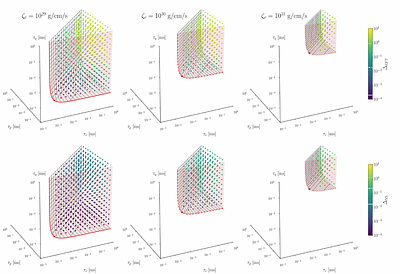
Breakdown of hydrodynamic universality in causal first-order viscous neutron star oscillations
By: Lennox S. Keeble, Alejandro Cárdenas-Avendaño
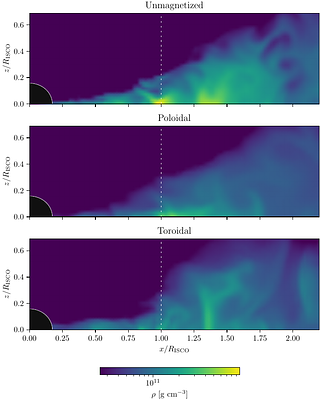
Numerical simulations of low-mass black hole-neutron star mergers with moderate eccentricities
By: Ivan Markin, Gonzalo Morrás, Tim Dietrich
By: Valentina Gonzalez-Moya, Ali Ovgun, Joel Saavedra
By: Jun-Kun Zhao
An extension principle for Einstein-Maxwell-charged scalar field system with finite Doppler exponent
By: Xinliang An, Haoyang Chen, Taoran He
By: The LIGO Scientific Collaboration, the Virgo Collaboration, the KAGRA Collaboration, A. G. Abac, A. Abe, I. Abouelfettouh, F. Acernese, K. Ackley, A. Adam, S. Adhicary, D. Adhikari, R. X. Adhikari, V. K. Adkins, S. Afroz, A. Agapito, D. Agarwal, M. Agathos, N. Aggarwal, S. Aggarwal, O. D. Aguiar, I. -L. Ahrend, L. Aiello, A. Ain, P. Ajith, T. Akutsu, L. Albers, W. Ali, S. Al-Kershi, C. Allan, C. Allene, A. Allocca, S. Al-Shammari, J. A. Alvarez, S. Alvarez-Lopez, W. Amar, O. Amarasinghe, A. Amato, F. Amicucci, C. Amra, A. B. Anand, C. Anand, A. Ananyeva, S. B. Anderson, W. G. Anderson, M. Andia, M. Ando, F. Andrade-Oliveira, M. Andrés-Carcasona, J. L. Andrey, T. Andrić, J. Anglin, J. Anna, J. M. Antelis, S. Antier, T. Aoki, M. Aoumi, E. Z. Appavuravther, E. A. Appelt, S. Appert, S. K. Apple, K. Arai, A. Araya, M. C. Araya, M. Arca Sedda, F. Arciprete, J. S. Areeda, N. Aritomi, F. Armato, S. Armstrong, N. Arnaud, M. Arogeti, S. M. Aronson, G. Ashton, Y. Aso, L. Asprea, M. Assiduo, S. Assis de Souza Melo, S. M. Aston, P. Astone, P. S. Aswathi, F. Attadio, F. Aubin, K. AultONeal, G. Avallone, N. Avdeev, E. A. Avila, S. Babak, C. Badger, S. Bae, S. Bagnasco, S. Baimukhametova, L. Baiotti, T. Baka, K. A. Baker, T. Baker, G. Balbi, G. Baldi, N. Baldicchi, M. Ball, G. Ballardin, M. Ballelli, S. W. Ballmer, S. Banagiri, B. Banerjee, D. Bankar, T. M. Baptiste, P. Baral, M. Baratti, J. C. Barayoga, K. Baric, B. C. Barish, D. Barker, D. Barman, N. Barman, F. Barone, B. Barr, M. Barrios, L. Barsotti, M. Barsuglia, D. Barta, M. A. Barton, I. Bartos, A. Basalaev, R. Bassiri, A. Basti, M. Bawaj, J. C. Bayley, A. C. Baylor, P. A. Baynard, M. Bazzan, V. M. Bedakihale, F. Beirnaert, M. Bejger, A. S. Bell, C. Bellani, D. S. Bellie, D. Beltran-Martinez, E. Benedetti, W. Benoit, I. Bentara, M. Ben Yaala, S. Bera, F. Bergamin, B. K. Berger, M. Beroiz, C. P. L. Berry, I. Berry, D. Bersanetti, T. Bertheas, A. Bertolini, J. Betzwieser, D. Beveridge, N. Bevins, J. Bezerra-Sobrinho, R. Bhandare, R. Bhatt, A. Bhattacharjee, D. Bhattacharjee, S. Bhattacharyya, S. Bhaumik, V. Biancalana, F. Bianchi, I. A. Bilenko, M. Bilicki, G. Billingsley, A. Binetti, S. Bini, S. Biot, O. Birnholtz, S. Biscoveanu, A. Bisht, M. Bitossi, M. -A. Bizouard, S. Blaber, J. Black, J. K. Blackburn, L. A. Blagg, C. D. Blair, D. G. Blair, M. Bloch, N. Bode, N. Boettner, P. Bogdan, G. Boileau, M. Boldrini, G. N. Bolingbroke, L. D. Bonavena, V. A. Bonhomme, E. Bonilla, M. S. Bonilla, A. Bonino, R. Bonnand, A. Borchers, N. Borghi, V. Boschi, S. Bose, V. Bossilkov, Y. Bothra, A. Boudon, T. D. Boybeyi, M. Boyle, A. Bozzi, C. Bradaschia, M. J. Brady, P. R. Brady, A. Branch, M. Branchesi, T. Briant, A. Brillet, M. Brinkmann, P. Brockill, E. Brockmueller, A. F. Brooks, D. D. Brown, M. L. Brozzetti, S. Brunett, G. Bruno, R. Bruntz, J. Bryant, Y. Bu, F. Bucci, A. Buchicchio, A. Buggiani, O. Bulashenko, T. Bulik, H. J. Bulten, A. Buonanno, K. Burtnyk, R. Buscicchio, N. Busdon, D. Buskulic, R. L. Byer, R. Cabrita, V. A. Cáceres-Barbosa, L. Cadonati, G. Cagnoli, C. Cahillane, A. Calafat, J. Calderón Bustillo, J. D. Callaghan, T. A. Callister, E. Calloni, S. R. Callos, K. Cannon, V. Cantory, H. Cao, L. A. Capistran, E. Capocasa, G. Capoccia, E. Capote, C. Capuano, G. Capurri, F. Carbognani, K. J. Cardona-Martínez, M. Carlassara, M. Carpinelli, G. Carrillo, G. Carullo, A. Casallas-Lagos, J. Casanueva Diaz, C. Casentini, S. Caudill, M. Cavaglià, R. Cavalieri, A. Ceja, G. Cella, P. Cerdá-Durán, N. Chabbra, W. Chaibi, A. Chakraborty, P. Chakraborty, S. Chakraborty, S. Chalathadka Subrahmanya, C. Chan, J. C. L. Chan, M. Chan, C. -Y. Chang, K. Chang, S. Chao, P. Charlton, E. Chassande-Mottin, C. Chatterjee, Debarati Chatterjee, Deep Chatterjee, M. Chaturvedi, S. Chaty, A. Chen, A. H. -Y. Chen, D. Chen, H. Chen, H. Y. Chen, S. Chen, Yanbei Chen, Yiwen Chen, G. Cheng, H. P. Cheng, P. Chessa, T. Cheunchitra, H. T. Cheung, S. Y. Cheung, F. Chiadini, G. Chiarini, A. Chiba, A. Chincarini, D. Chintala, A. Chiummo, A. Chopra, C. Chou, S. Choudhary, N. Christensen, Y. K. Chu, S. S. Y. Chua, G. Ciani, P. Ciecielag, M. Cieślar, M. Cifaldi, B. Cirok, F. Clara, J. A. Clark, T. A. Clarke, A. Claveus, M. R. Claypool, S. Clesse, F. Cleva, S. M. Clyne, E. Coccia, E. Codazzo, P. -F. Cohadon, D. E. Cohen, E. Colangeli, O. Cole, M. Colleoni, C. G. Collette, J. Collins, S. Colloms, A. Colombo, G. Compère, C. M. Compton, G. Connolly, L. Conti, T. R. Corbitt, I. Cordero-Carrión, S. Corezzi, N. J. Cornish, A. Corsi, S. Cortese, L. A. Corubolo, L. Cotnoir, R. Cottingham, J. A. Cotturone, M. W. Coughlin, P. Couvares, R. Coyne, A. Cozzumbo, J. D. E. Creighton, T. D. Creighton, S. Crook, R. Crouch, J. Csizmazia, K. Csukás, T. J. Cullen, A. Cumming, E. Cuoco, M. Cusinato, R. R. Cuzinatto, L. V. da Conceição, T. Dal Canton, S. Dall'Osso, S. Dal Pra, G. Dálya, Y. Dang, B. D'Angelo, S. Danilishin, O. Danner, S. D'Antonio, K. Danzmann, K. E. Darroch, L. P. Dartez, R. Das, S. Das, A. Dasgupta, V. Dattilo, A. Daumas, I. Dave, A. Davenport, T. F. Davies, D. Davis, M. C. Davis, P. Davis, E. J. Daw, M. Dax, J. De Bolle, E. deBruin, M. Deenadayalan, J. Degallaix, U. Deka, M. De Laurentis, C. J. Delgado Mendez, F. De Lillo, S. Della Torre, W. Del Pozzo, O. M. del Rio, A. Demagny, F. De Marco, G. Demasi, F. De Matteis, C. de Melo, N. Demos, T. Dent, A. Depasse, N. DePergola, R. De Pietri, R. De Rosa, C. De Rossi, E. K. Derrick, M. Desai, D. DeSantis, S. Deshmukh, V. Deshmukh, R. De Simone, S. Determan, S. Dhage, A. Dhani, R. Dhatri, R. Dhurkunde, R. Diab, C. Diaz, M. C. Díaz, F. Diaz Guerra, M. Di Cesare, M. A. Dicorato, T. Dietrich, C. Di Fronzo, M. Di Giovanni, D. Diksha, J. Ding, S. Di Pace, I. Di Palma, D. Di Piero, F. Di Renzo, Divyajyoti, A. Dmitriev, J. P. Docherty, Z. Doctor, N. Doerksen, E. Dohmen, A. Doke, A. Domiciano De Souza, L. D'Onofrio, F. Donovan, K. L. Dooley, S. Doravari, O. Dorosh, F. Dosopoulou, M. Drago, J. C. Driggers, M. Dubois, R. S. Dumbreck, U. Dupletsa, D. D'Urso, P. Dutta Roy, H. Duval, S. Dwivedi, S. E. Dwyer, C. Eassa, M. Eberhardt, M. Ebersold, M. Ebiri, G. Eddolls, A. Effler, J. Eichholz, H. Einsle, M. Eisenmann, M. Emma, K. Endo, R. Enficiaud, V. Ernst, L. Errico, R. Espinosa, M. Esposito, R. C. Essick, H. Estellés, T. Etzel, M. Evans, T. Evstafyeva, J. M. Ezquiaga, F. Fabrizi, V. Fafone, S. Fairhurst, X. Fan, A. M. Farah, B. Farr, W. M. Farr, M. Favata, M. Fays, M. Fazio, J. Feicht, M. M. Fejer, J. -N. Feldhusen, E. Fenyvesi, A. Feo, J. Fernandes, T. Fernandes, G. Fernández Rodríguez, D. Fernando, S. Ferraiuolo, T. A. Ferreira, M. Ferrer-Martinez, F. Fidecaro, P. Figura, I. Fiori, M. Fishbach, R. P. Fisher, S. K. Fitzgerald, V. Fiumara, R. Flaminio, B. Flanagan, S. M. Fleischer, L. S. Fleming, F. Flocco, E. Floden, H. Fong, J. A. Font, F. Fontinele-Nunes, C. Foo, B. Fornal, P. W. F. Forsyth, A. Fragkos, N. Franchini, A. Franco-Ordovas, F. Frappez, F. Frasconi, J. P. Freed, Z. Frei, A. Freise, O. Freitas, R. Frey, W. Frischhertz, P. Fritschel, V. V. Frolov, M. Fuentes-Garcia, R. Fujii, T. Fujimori, Y. Fujiwara, P. Fulda, M. Fyffe, B. U. Gadre, J. R. Gair, S. Galaudage, V. Galdi, M. Galimberti, A. Gamboa, S. Gamoji, A. Ganguly, B. Garaventa, P. García Abia, J. García-Bellido, C. García-Quirós, J. W. Gardner, S. Garg, J. Gargiulo, X. Garrido, A. Garron, F. Garufi, P. A. Garver, C. Gasbarra, F. Gautier, V. Gayathri, T. Gayer, G. Gemme, A. Gennai, V. Gennari, J. George, R. George, O. Gerberding, L. Gergely, A. Ghinassi, Archisman Ghosh, Sayantan Ghosh, Shaon Ghosh, Shrobana Ghosh, Suprovo Ghosh, Tathagata Ghosh, J. A. Giaime, K. D. Giardina, D. R. Gibson, C. Gier, F. Gittins, J. Glanzer, F. Glotin, E. Glowacki, J. Godfrey, R. V. Godley, O. Godwin, A. S. Goettel, E. Goetz, J. Golomb, S. Gomez Lopez, G. González, P. Goodarzi, S. R. Goode, A. Goodwin-Jones, M. Gosselin, S. M. Goss-Grubbs, C. Gostiaux, R. Gouaty, D. W. Gould, D. Goupilliere, K. Govorkova, A. Grado, V. Graham, A. E. Granados, M. Granata, V. Granata, S. Gras, P. Grassia, C. Gray, R. Gray, G. Greco, A. C. Green, L. Green, S. R. Green, A. M. Gretarsson, E. M. Gretarsson, D. Griffith, C. Grimaud, H. Grote, S. Grunewald, A. G. Guerrero, G. M. Guidi, T. Guidry, H. K. Gulati, F. Gulminelli, H. Guo, W. Guo, Y. Guo, A. Gupta, I. Gupta, N. C. Gupta, S. K. Gupta, V. Gupta, N. Gupte, N. Guttman, F. Guzman, M. Haberland, S. Haino, E. D. Hall, E. Z. Hamilton, G. Hammond, W. -B. Han, M. Haney, J. Hanks, C. Hanna, M. D. Hannam, O. A. Hannuksela, H. Hansen, J. Hanson, R. Harada, A. R. Hardison, S. Harikumar, K. Haris, I. Harley-Trochimczyk, J. Harms, G. M. Harry, I. W. Harry, M. T. Hartman, B. Haskell, C. -J. Haster, K. Haughian, H. Hayakawa, K. Hayama, J. Hedberg, A. Heffernan, D. Hegde, M. C. Heintze, J. Heinzel, H. Heitmann, F. Hellman, A. F. Helmling-Cornell, G. Hemming, O. Henderson-Sapir, M. Hendry, I. S. Heng, M. H. Hennig, C. Henshaw, A. Heranval, M. Heurs, A. L. Hewitt, J. Heynen, J. Heyns, S. Hido, S. Hild, M. Hill, S. Hill, Y. Himemoto, C. Hirose, D. Hofman, N. A. Holland, K. Holley-Bockelmann, I. J. Hollows, D. E. Holz, L. Honet, K. M. Hoops, M. E. Hoque, D. J. Horton-Bailey, J. Hough, S. Hourihane, N. T. Howard, E. J. Howell, C. G. Hoy, P. Hsi, H. -Y. Hsieh, C. Hsiung, S. -H. Hsu, W. -F. Hsu, H. Y. Huang, Y. Huang, A. D. Huddart, B. Hughey, D. C. Y. Hui, S. Husa, L. Iampieri, G. A. Iandolo, M. Ianni, Y. Ichinose, K. Ide, R. Iden, A. Ierardi, S. Ikeda, H. Imafuku, K. Imai, G. Inguglia, Y. Inoue, P. Iosif, J. Irwin, K. Ishida, R. Ishikawa, T. Ishikawa, H. Ishino, M. Isi, K. S. Isleif, Y. Itoh, S. Iwaguchi, M. M. Iwaya, B. R. Iyer, C. Jacquet, T. Jacquot, S. J. Jadhav, S. P. Jadhav, K. Jain, A. L. James, K. Jani, S. Jani, J. Janquart, N. N. Janthalur, S. Jaraba, P. Jaranowski, R. Jaume, W. Javed, M. Jensen, W. Jia, J. Jiang, H. -B. Jin, S. -J. Jin, G. R. Johns, N. A. Johnson, M. C. Johnston, R. Johnston, N. Johny, D. H. Jones, D. I. Jones, R. Jones, P. Joshi, S. K. Joshi, G. Joubert, J. Ju, L. Ju, I. L. Juarez-Reyes, K. Jung, H. B. Kabagoz, B. Kacskovics, T. Kajita, I. Kaku, V. Kalogera, M. Kalomenopoulos, M. Kamiizumi, N. Kanda, S. Kandhasamy, G. Kang, J. B. Kanner, S. J. Kapadia, D. P. Kapasi, A. Karia, A. S. Karia, R. Kashyap, M. Kasprzack, H. Kato, T. Kato, E. Katsavounidis, W. Katzman, R. Kaushik, K. Kawabe, S. Kawamura, D. Keitel, S. A. Kemper, L. J. Kemperman, J. Kennington, R. Kesharwani, J. S. Key, R. Khadela, S. S. Khadkikar, F. Y. Khalili, C. Khamar, F. Khan, M. Khursheed, N. M. Khusid, W. Kiendrebeogo, C. Kim, G. Kim, J. C. Kim, K. Kim, M. H. Kim, S. Kim, Y. -M. Kim, C. Kimball, K. Kimes, M. Kinnear, J. S. Kissel, S. Klimenko, A. M. Knee, N. Knust, K. Kobayashi, S. M. Koehlenbeck, K. Kohri, K. Kokeyama, S. Koley, P. Kolitsidou, A. E. Koloniari, K. Komori, K. Kompanets, A. K. H. Kong, A. Kontos, K. Kopczuk, L. M. Koponen, M. Korobko, X. Kou, N. Kouvatsos, T. Koyama, D. B. Kozak, E. Kraja, S. L. Kranzhoff, V. Kringel, N. V. Krishnendu, S. Kroker, A. Królak, K. Kruska, J. Kubisz, K. Kubota, G. Kuehn, D. Kukla, A. Kulur Ramamohan, Achal Kumar, Anil Kumar, Dhruv Kumar, Praveen Kumar, Prayush Kumar, Rahul Kumar, Rakesh Kumar, Ravi Kumar, Sumit Kumar, J. Kume, K. Kuns, N. Kuntimaddi, S. Kuroyanagi, K. Kwak, K. Kwan, S. Kwon, G. Lacaille, D. Laghi, A. H. Laity, N. Lajili, A. Lakhal, E. Lalande, M. Lalleman, S. Lalvani, M. Landry, R. N. Lang, A. Lange, J. A. Lange, R. Langgin, B. Lantz, I. La Rosa, O. Laske, P. D. Lasky, L. Lavezzi, J. Lawrence, M. Laxen, A. Lazzarini, C. Lazzaro, P. Leaci, L. Leali, Y. K. Lecoeuche, H. W. Lee, J. Lee, K. Lee, R. -K. Lee, R. Lee, Sungho Lee, Sunjae Lee, W. Lee, Y. Lee, F. Legger, I. N. Legred, J. Lehmann, L. Lehner, M. Le Jean, A. Lema{î}tre, R. Lemrani Alaoui, M. Lenti, M. Leonardi, M. Lequime, M. Lesovsky, N. Letendre, M. Lethuillier, Y. Levin, S. Lexmond, K. Leyde, A. K. Y. Li, K. L. Li, T. G. F. Li, X. Li, Y. Li, Z. Li, Q. Liang, C-Y. Lin, E. T. Lin, F. Lin, L. C. -C. Lin, Y. -C. Lin, C. Lindsay, S. D. Linker, A. Liu, F. Liu, G. C. Liu, Jian Liu, S. Liu, F. Llamas Villarreal, J. Llobera-Querol, R. K. L. Lo, J. -P. Locquet, S. C. G. Loggins, L. T. London, A. Longo, M. Lopez Portilla, A. Lorenzo-Medina, V. Loriette, M. Lormand, M. Lorusso, G. Losurdo, T. P. Lott, J. D. Lough, H. A. Loughlin, C. O. Lousto, N. K. Y. Low, N. Lu, H. Lück, O. Lukina, D. Lumaca, A. P. Lundgren, L. Lunghini, A. W. Lussier, L. -T. Ma, X. Ma, M. Ma'arif, S. MacBride, K. Machida, D. M. Macleod, I. A. O. MacMillan, A. Macquet, S. S. Madekar, S. Maenaut, S. S. Magare, R. M. Magee, E. Maggio, M. Magnozzi, P. Mahapatra, M. Mahesh, S. Majhi, E. Majorana, C. N. Makarem, E. Makelele, N. Malagon, D. Malakar, J. A. Malaquias-Reis, U. Mali, S. Maliakal, A. Malik, L. Mallick, A. -K. Malz, N. Man, M. Mancarella, V. Mandic, V. Mangano, Z. Mangi, B. Mannix, G. L. Mansell, M. Manske, M. Mantovani, M. Mapelli, S. Marchetti, F. Marion, J. Mark, A. S. Markosyan, J. Markus, E. Maros, S. Marsat, F. Martelli, I. W. Martin, R. M. Martin, B. B. Martinez, M. Martinez, V. Martinez, A. Martini, Juan Carlos Martins, Julio C. Martins, D. V. Martynov, E. J. Marx, L. Massaro, A. Masserot, M. Masso-Reid, T. Masters, S. Mastrogiovanni, G. Mastropasqua, M. Matiushechkina, A. Matte-Landry, L. Maurin, N. Mavalvala, N. Maxwell, A. McCann, G. McCarrol, R. McCarthy, D. E. McClelland, S. McCormick, L. McCuller, L. I. McDermott, C. McElhenny, G. I. McGhee, K. B. M. McGowan, J. McIver, A. McLeod, I. McMahon, T. McRae, R. McTeague, K. McWhirter, D. Meacher, B. N. Meagher, R. Mechum, L. G. Medeiros, R. M. Mehta, A. Melatos, C. S. Menoni, R. A. Mercer, L. Mereni, K. Merfeld, E. L. Merilh, J. R. Mérou, C. Messick, M. Meyer-Conde, F. Meylahn, H. Miao, C. Michel, Y. Michimura, H. Middleton, D. P. Mihaylov, S. J. Miller, M. Millhouse, E. Milotti, V. Milotti, E. Minakaki, Y. Minenkov, Ll. M. Mir, L. Mirasola, C. -A. Miritescu, A. Mishra, C. Mishra, T. Mishra, A. Mitchell, J. G. Mitchell, O. Mitchem, S. Mitra, V. P. Mitrofanov, K. Mitsuhashi, R. Mittleman, O. Miyakawa, S. Miyoki, G. Mo, L. Mobilia, S. R. P. Mohapatra, M. Molina-Ruiz, M. Mondin, M. Montani, G. Montefusco, C. J. Moore, D. Moraru, A. More, S. More, C. Moreno, E. A. Moreno, G. Moreno, A. Moreso Serra, C. Morgan, S. Morisaki, S. Moriwaki, Y. Moriwaki, G. Morras, A. Moscatello, M. Mould, B. Mours, C. M. Mow-Lowry, L. Muccillo, F. Muciaccia, Arunava Mukherjee, D. Mukherjee, Samanwaya Mukherjee, Soma Mukherjee, Subroto Mukherjee, Suvodip Mukherjee, N. Mukund, A. Mullavey, C. L. Mungioli, Y. Murakami, M. Murakoshi, P. G. Murray, D. Nabari, S. Nadji, A. Nagar, N. Nagarajan, K. Nakagaki, A. Nakamura, K. Nakamura, H. Nakano, M. Nakano, D. Nanadoumgar-Lacroze, D. Nandi, V. Napolano, S. U. Naqvi, P. Narayan, A. Nardecchia, I. Nardecchia, T. Narikawa, H. Narola, L. Naticchioni, R. K. Nayak, J. Neeson, L. Negri, A. Nela, C. Nelle, A. Nelson, T. J. N. Nelson, A. Nemmani, A. Neunzert, M. Newell, S. Ng, T. C. K. Ng, L. -A. T. Nguyen, T. T. Nguyen, L. Nguyen Quynh, A. B. Nielsen, Y. Nishino, A. Nishizawa, S. Nissanke, W. Niu, F. Nocera, J. Noller, M. Norman, M. Norris, C. North, J. Novak, G. Nurbek, L. K. Nuttall, K. Obayashi, J. Oberling, C. E. Ochoa, C. O'Connor, J. O'Dell, E. Oelker, M. Oertel, G. Oganesyan, J. J. Oh, T. O'Hanlon, M. Ohashi, F. Ohme, Y. Okabe, I. Oke, R. Oliveira, R. Omer, N. O'Neill, M. Onishi, K. Oohara, P. Ophardt, R. J. Oram, B. O'Reilly, R. O'Shaughnessy, S. Oshino, J. Ostrovska, A. Osumi, I. Ota, G. Othman, M. Otsuka, D. J. Ottaway, A. Ouzriat, H. Overmier, B. J. Owen, A. E. Pace, M. A. Page, A. Pai, S. Pal, M. A. Palaia, M. Pálfi, C. Palomba, H. Pan, J. Pan, K. -C. Pan, P. K. Panda, Shiksha Pandey, Swadha Pandey, P. T. H. Pang, F. Pannarale, B. C. Pant, F. H. Panther, M. Panzeri, F. Paoletti, A. Paoli, A. Paolone, A. Papadopoulos, E. E. Papalexakis, L. Papalini, G. Papigkiotis, A. Paquis, A. Parisi, B. -J. Park, Jihwan Park, Junegyu Park, W. Parker, G. Pascale, D. Pascucci, A. Pasqualetti, L. Passenger, D. Passuello, O. Patane, A. V. Patel, L. Pathak, A. Patra, B. Patricelli, B. G. Patterson, K. Paul, S. Paul, E. Payne, T. Pearce, M. Pedraza, A. Pele, F. E. Peña Arellano, X. Peng, Y. Peng, S. Penn, A. Perreca, J. Perret, D. Pesios, S. Petracca, C. Petrillo, H. P. Pfeiffer, H. Pham, K. A. Pham, K. S. Phukon, H. Phurailatpam, L. Piccari, O. J. Piccinni, M. Pichot, A. Pied, M. Piendibene, F. Piergiovanni, L. Pierini, G. Pierra, V. Pierro, M. Pillas, B. Pillon, L. Pinard, I. M. Pinto, M. Pinto, B. J. Piotrzkowski, M. Pirello, A. Pisarski, M. D. Pitkin, E. Placidi, M. L. Planas, C. Plunkett, R. Poggiani, E. Polini, M. Polo, J. Pomper, L. Pompili, J. Poon, E. Porcelli, A. S. Porter, E. K. Porter, C. Posnansky, J. Powell, G. S. Prabhu, M. Pracchia, A. K. Prajapati, K. Prasai, R. Prasanna, P. Prasia, G. Pratten, G. Principe, G. A. Prodi, P. Prosperi, P. Prosposito, A. Puecher, J. Pullin, M. Punturo, P. Puppo, M. Pürrer, H. Qi, M. Qiao, J. Qin, G. Quéméner, V. Quetschke, P. J. Quinonez, R. Rading, I. Rainho, S. Raja, C. Rajan, B. Rajbhandari, M. R. Raj Sah, K. E. Ramirez, F. A. Ramis Vidal, M. Ramos Arevalo, A. Ramos-Buades, S. Ranjan, M. Ranjbar, K. Ransom, P. Rapagnani, B. Ratto, A. Ravichandran, A. Ray, V. Raymond, M. Razzano, J. Read, J. Redepenning, J. Regan, T. Regimbau, T. Reichardt, S. Reid, C. Reissel, D. H. Reitze, A. I. Renzini, B. Revenu, A. Revilla-Peña, F. Ricci, M. Ricci, A. Ricciardone, J. Rice, J. W. Richardson, M. L. Richardson, K. Riles, H. K. Riley, A. Riminucci, F. Robinet, M. Robinson, A. Rocchi, J. Rodriguez, R. Rodriguez Lopez, L. Rolland, J. G. Rollins, A. E. Romano, R. Romano, A. Romero-Rodríguez, I. M. Romero-Shaw, J. H. Romie, S. Ronchini, T. J. Roocke, T. J. Rosauer, C. A. Rose, D. Rosińska, M. P. Ross, M. Rossello-Sastre, S. Rowan, K. Rowlands, S. K. Roy, S. Roy, T. RoyChowdhury, D. Rozza, P. Ruggi, G. H. Ruiz, E. Ruiz Morales, K. Ruiz-Rocha, V. Russ, S. M. S, S. Sachdev, T. Sadecki, F. Safai Tehrani, P. Saffarieh, S. Safi-Harb, S. Saha, T. Sainrat, S. Sajith Menon, K. Sakai, Y. Sakai, M. Sakellariadou, S. Sakon, F. Salces-Carcoba, L. Salconi, M. Saleem, F. Salemi, M. Sallé, M. Salomé, S. U. Salunkhe, S. Salvador, A. Salvarese, A. Samajdar, P. M. Samir, A. Sanchez, E. J. Sanchez, J. Sanchez, D. Sanchez-Cid, N. Sanchis-Gual, J. R. Sanders, E. M. Sänger, F. Santoliquido, E. Sapkin, F. Sarandrea, T. R. Saravanan, P. Sarkar, A. Sasli, P. Sassi, B. Sassolas, O. Sauter, R. L. Savage, T. Savicheva, T. Sawada, H. L. Sawant, D. Schaetzl, M. Scheel, A. Schiebelbein, M. G. Schiworski, K. Schluterman, P. Schmidt, R. Schnabel, M. Schneewind, R. M. S. Schofield, M. Schoor, K. Schouteden, B. W. Schulte, M. Schulz, B. F. Schutz, E. Schwartz, M. Scialpi, J. Scott, S. M. Scott, R. M. Sedas, T. C. Seetharamu, M. Seglar-Arroyo, Y. Sekiguchi, D. Sellers, N. Sembo, E. G. Seo, J. W. Seo, G. Seong, V. Sequino, M. Serra, C. K. Sethi, A. Sevrin, T. Shaffer, U. S. Shah, M. A. Shaikh, L. Shao, J. Sharkey, A. Sharma, A. K. Sharma, Preeti Sharma, Priyanka Sharma, Sushant Sharma-Chaudhary, P. Shawhan, T. Shen, Z. -H. Shi, K. Shimode, H. Shinkai, S. Shirke, D. H. Shoemaker, D. M. Shoemaker, R. W. Short, S. ShyamSundar, H. Siegel, V. Sierra, D. Sigg, L. Silenzi, P. J. S. Silva, L. Silvestri, M. Simmonds, L. P. Singer, A. Singh, D. Singh, M. K. Singh, N. Singh, S. Singh, M. R. Sinha, P. Sinha, A. M. Sintes, V. Skliris, B. J. J. Slagmolen, T. J. Slaven-Blair, J. Smetana, D. A. Smith, J. R. Smith, J. Smith, L. Smith, W. J. Smith, S. Soares de Albuquerque Filho, M. Soares-Santos, K. Somiya, I. Song, Q. Song, S. Soni, V. Sordini, F. Sorrentino, H. Sotani, N. E. Sovitzky, F. Spada, V. Spagnuolo, A. P. Spencer, M. Spera, P. Spinicelli, A. K. Srivastava, F. Stachurski, V. V. Stanford, A. Stanton, D. A. Steer, N. Steinle, J. Steinlechner, S. Steinlechner, C. Stephens, N. Stergioulas, M. StPierre, J. Stremiz, M. D. Strong, A. Strunk, M. Suchenek, S. Sudhagar, R. Sugimoto, L. Suleiman, K. D. Sullivan, J. Sun, L. Sun, S. Sunil, J. Suresh, P. J. Sutton, K. Suzuki, M. Suzuki, A. Svizzeretto, B. L. Swinkels, A. Syx, M. J. Szczepańczyk, M. Tacca, M. Tagliazucchi, H. Tagoshi, S. C. Tait, H. Takaba, K. Takada, H. Takahashi, R. Takahashi, A. Takamori, S. Takano, H. Takeda, I. Takimoto Schmiegelow, C. Talbot, M. Tamaki, N. Tamanini, D. Tanabe, K. Tanaka, S. J. Tanaka, S. Tanioka, D. B. Tanner, W. Tanner, L. Tao, R. D. Tapia, E. N. Tapia San Martín, A. Taruya, J. D. Tasson, J. G. Tau, A. Tejera, J. G. Temple, Y. Teng, H. Themann, A. Theodoropoulos, M. P. Thirugnanasambandam, L. M. Thomas, M. Thomas, P. Thomas, J. E. Thompson, S. R. Thondapu, E. Thrane, J. Tissino, A. Tiwari, Pawan Tiwari, Praveer Tiwari, S. Tiwari, V. Tiwari, M. R. Todd, E. Tofani, M. Toffano, A. M. Toivonen, K. Toland, T. Tomaru, V. Tommasini, H. Tong, C. I. Torrie, I. Tosta e Melo, E. Tournefier, A. Trapananti, R. Travaglini, F. Travasso, G. Traylor, L. Traylor, M. Trevor, M. C. Tringali, A. Tripathee, G. Troian, A. Trovato, L. Trozzo, R. J. Trudeau, T. Tsang, S. Tsuchida, K. Tsuji, L. Tsukada, A. Tuci, M. Turconi, C. Turski, H. Ubach, A. S. Ubhi, N. Uchikata, T. Uchiyama, R. P. Udall, T. Uehara, V. Undheim, V. Upadhyaya, L. E. Uronen, T. Ushiba, M. Vacatello, H. Vahlbruch, G. Vajente, J. Valencia, M. Valentini, E. Vallejo-Pagès, S. A. Vallejo-Peña, S. Vallero, M. van Dael, E. Van den Bossche, J. F. J. van den Brand, C. Van Den Broeck, M. van der Kolk, M. van der Sluys, A. Van de Walle, J. van Dongen, K. Vandra, M. VanDyke, H. van Haevermaet, J. V. van Heijningen, P. Van Hove, J. Vanier, J. Vanosky, N. van Remortel, M. Vardaro, A. F. Vargas, V. Varma, A. Vecchio, G. Vedovato, J. Veitch, P. J. Veitch, S. Venikoudis, P. Verdier, M. Vereecken, D. Verkindt, B. Verma, S. Verma, Y. Verma, S. M. Vermeulen, F. Vetrano, A. Veutro, A. Viceré, S. Vidyant, A. D. Viets, A. Vijaykumar, A. Vilkha, N. Villanueva Espinosa, E. T. Vincent, J. -Y. Vinet, S. Viret, S. Vitale, A. Vives, L. Vizmeg, B. Vizzone, H. Vocca, D. Voigt, E. R. G. von Reis, J. S. A. von Wrangel, W. E. Vossius, L. Vujeva, S. P. Vyatchanin, J. Wack, L. E. Wade, M. Wade, K. J. Wagner, L. Wallace, R. -Z. Wan, H. Wang, P. Wang, W. H. Wang, Y. F. Wang, Z. Wang, R. L. Ward, J. Warner, M. Was, T. Washimi, N. Y. Washington, D. Watarai, B. Weaver, S. A. Webster, N. L. Weickhardt, M. Weinert, A. J. Weinstein, R. Weiss, L. Wen, K. Wette, C. Wheeler, J. T. Whelan, B. F. Whiting, E. G. Wickens, D. Wilken, B. M. Williams, D. Williams, M. J. Williams, N. S. Williams, J. L. Willis, B. Willke, M. Wils, L. Wimmer, C. W. Winborn, A. Wingfield, J. Winterflood, C. C. Wipf, G. Woan, N. E. Wolfe, H. T. Wong, I. C. F. Wong, T. Wouters, J. L. Wright, M. Wright, B. Wu, C. Wu, D. S. Wu, H. Wu, K. Wu, T. Wu, Z. Wu, E. Wuchner, D. M. Wysocki, V. A. Xu, Y. Xu, N. Yadav, H. Yamamoto, K. Yamamoto, T. S. Yamamoto, T. Yamamoto, R. Yamazaki, T. Yan, H. Yang, K. Z. Yang, Y. Yang, Z. Yarbrough, J. Yébana Carrilero, A. B. Yelikar, X. Yin, J. Yokoyama, T. Yokozawa, M. Yoshihara, S. Yuan, H. Yuzurihara, M. Zanatta, M. Zanolin, M. Zeeshan, T. Zelenova, J. -P. Zendri, M. Zeoli, M. Zerrad, M. Zevin, H. Zhang, J. Zhang, L. Zhang, N. Zhang, R. Zhang, T. Zhang, C. Zhao, J. Zhao, Yue Zhao, Yuhang Zhao, L. -M. Zheng, Y. Zheng, L. Zhizhong, H. Zhong, H. Zhou, H. O. Zhu, X. -J. Zhu, Z. -H. Zhu, Z. Zhu, D. Z. Zieba, A. B. Zimmerman, L. Zimmermann, M. E. Zucker