In silico drug repurposing and in vitro validation of cestode fatty acid binding proteins

In silico drug repurposing and in vitro validation of cestode fatty acid binding proteins
Rodriguez, S.; Alberca, L. N.; Gavernet, L.; Franchini, G. R.; Talevi, A.
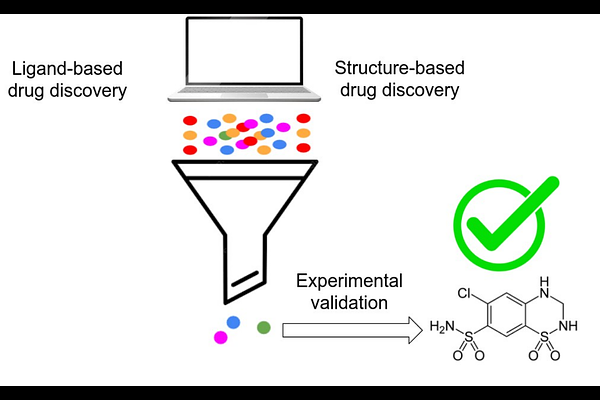
AbstractEchinococcosis is a Neglected Tropical Disease (NTD) caused by Echinococcus granulosus and Echinococcus multilocularis, the etiological agents of cystic and alveolar echinococcosis, respectively. These infections pose a significant public health burden, particularly in endemic regions. Cestodes lack key enzymes involved in lipid metabolism and must acquire lipids from their hosts. Fatty Acid Binding Proteins (FABPs), which mediate lipid trafficking and intracellular transport, have therefore emerged as essential and potentially druggable targets. In this study, we implemented an integrated virtual screening strategy combining ligand-based and structure-based approaches to identify novel FABP binders as potential therapeutic agents against Echinococcus spp. High-specificity screening of approximately 435,000 compounds yielded a limited number of prioritized in silico hits. Four compounds (hydrochlorothiazide, naratriptan, fenticonazole, and montelukast) were selected for experimental validation, prioritizing repurposing candidates. Fluorescence displacement assays confirmed that hydrochlorothiazide binds to three cestode FABPs (EgFABP1, EmFABP1, and EmFABP3), validating the predictive performance of the computational workflow. These findings support the value of parallel in silico screening strategies and drug repurposing approaches for the discovery of new therapeutic candidates against neglected tropical diseases. Keywords:Drug discovery, Drug repositioning; Drug repurposing; Echinococcus spp; FABP; Medicinal chemistry; Neglected tropical diseases;Virtual screening